
Have you ever typed “I am appreciative for your help” and paused something just felt slightly off? You are not alone. This small preposition choice trips up English learners and even confident native speakers every single day. The difference between “appreciative of” and “appreciative for” may look minor on the surface, but in formal emails, academic writing, and professional settings, it carries real weight.
In this complete guide, you will learn exactly which form is correct, why it matters, and how to use both confidently in any situation. We have broken it down with clear grammar rules, real-world examples, comparison tables, and expert tips everything you need to get it right every time.
What Does “Appreciative” Mean?

Before diving into the preposition debate, let us get clear on what “appreciative” actually means.
Appreciative is an adjective. It describes a feeling or expression of recognition, gratitude, or admiration toward someone or something. It goes beyond a simple “thank you” it implies that you are aware of value, effort, or quality, and you are acknowledging it.
Here is a quick breakdown of how “appreciative” differs from its near-synonyms:
| Word | Tone | Typical Use |
| Appreciative | Recognition + acknowledgment | Formal, professional, academic |
| Grateful | Deep emotional thankfulness | Personal, heartfelt contexts |
| Thankful | Light, conversational gratitude | Casual, everyday speech |
“Appreciative” elevates your sentence. It is the word you reach for when you want to sound polished, professional, and precise. But it only works fully when paired with the right preposition.
The Core Rule: “Appreciative of” vs “Appreciative for”
Let us address the main question directly, because clarity here is everything.
“Appreciative of” is the grammatically correct and standard form in English. It is used across formal writing, academic publications, professional emails, and edited journalism. “Appreciative for,” on the other hand, is considered non-standard, and while it appears in casual speech, it tends to sound awkward or imprecise in written contexts.
Here is a simple rule to memorize:
✅ Use “appreciative of” to express recognition or acknowledgment toward a person, action, quality, or thing.
⚠️ Use “appreciative for” only in informal, conversational contexts and even then, “appreciative of” usually sounds more natural.
This pattern is not random. It follows a deep grammatical logic, which we will explore next.
Why “Of” and Not “For”? The Grammar Explained
English adjectives that express recognition, awareness, or acknowledgment almost always pair with the preposition “of.” Think about these parallel structures:
- Aware of the situation
- Mindful of the risk
- Conscious of the effort
- Proud of the result
- Appreciative of your time
Notice the pattern? All of these adjectives point toward a source, a person, action, or quality and “of” is the connector that creates that link. It functions like an arrow pointing back to the specific thing being acknowledged.
“For,” by contrast, tends to indicate purpose, cause, or exchange. It looks forward “I am grateful for this gift” points toward something received. Since “appreciative” already implies recognition of an existing quality or effort, using “for” creates a small grammatical mismatch.
This is why linguists and grammar authorities consistently recommend “of” as the correct companion for “appreciative.”
Data Doesn’t Lie: How Common Is Each Form?
The numbers strongly support one side of this debate:
| Phrase | Frequency in Formal Writing | Context |
| Appreciative of | ~90–95% of all uses | Academic, professional, journalistic |
| Appreciative for | ~4–10% of all uses | Informal speech, casual writing |
According to corpus studies and usage databases, “appreciative of” dominates in newspapers, academic journals, and professional communication. “Appreciative for” surfaces occasionally in informal blogs, social media posts, and casual conversation but editors and proofreaders routinely flag it in formal documents.
Google Ngram Viewer data also confirms that “appreciative of” has held consistent dominance throughout the 20th and 21st centuries, while “appreciative for” has never gained significant traction in published, edited English.
Correct Usage of “Appreciative of” Examples Across Contexts
Let us look at how “appreciative of” works naturally in a variety of real-world situations.
In Professional and Workplace Communication
- “We are appreciative of your dedication to this project.”
- “The management team is appreciative of the effort all employees put in this quarter.”
- “I am deeply appreciative of the guidance you provided during my onboarding.”
- “The board is appreciative of your detailed financial report.”
These sentences convey respect and precision. In a professional context, this phrasing signals that you are not just being polite you are genuinely recognizing a specific contribution.
In Academic Writing
- “The researcher was appreciative of the participants’ time and cooperation.”
- “The author remains appreciative of the peer reviewers whose feedback strengthened this paper.”
- “Students who are appreciative of constructive criticism tend to grow faster.”
Academic writing demands precision, and “appreciative of” delivers it. It points clearly to a specific source of gratitude without vagueness.
In Personal and Social Contexts
- “I am so appreciative of everything you have done for me.”
- “She was genuinely appreciative of his patience during that difficult period.”
- “We are appreciative of your continued friendship and support.”
Even in personal settings, “appreciative of” sounds warm and sincere, never stiff or over-formal.
In Formal Emails and Cover Letters
- “I am appreciative of this opportunity to interview for the position.”
- “Dear Professor Hanson, I am truly appreciative of your mentorship this semester.”
- “We are appreciative of your prompt response to our inquiry.”
In professional correspondence, this phrasing stands out as both gracious and grammatically sound.
When “Appreciative for” Is Used and Whether It Works
Let us be honest: “appreciative for” does exist in real English usage. It is not entirely invented. Here is where and how it appears:
Informal and Social Media Contexts
- “Feeling appreciative for all the love and support this year! 🙏”
- “So appreciative for this beautiful community.”
- “Just appreciative for the little things in life.”
In casual social media captions or informal speech, “appreciative for” carries an emotional, heartfelt tone. It expresses broad, general gratitude rather than pointing to a specific quality or action. Many people write it this way because it echoes “grateful for,” which is perfectly correct.
The “Grateful for” Influence
This is the root cause of most confusion. Since “grateful for” is grammatically correct and widely accepted, learners naturally assume “appreciative for” follows the same rule. But the two words are not true synonyms they behave differently with prepositions:
| Expression | Grammatical Status | Example |
| Grateful for | ✅ Correct and standard | “I’m grateful for your help.” |
| Thankful for | ✅ Correct and standard | “I’m thankful for this opportunity.” |
| Appreciative of | ✅ Correct and standard | “I’m appreciative of your help.” |
| Appreciative for | ⚠️ Non-standard / informal | “I’m appreciative for your help.” |
The takeaway: just because “grateful for” is right does not mean “appreciative for” works the same way. The words have different grammatical behavior, and mixing them up leads to imprecise writing.
Side-by-Side Sentence Comparisons
Sometimes the best way to see the difference is to compare the two forms directly:
| Situation | “Appreciative of” (Standard) | “Appreciative for” (Informal) |
| Professional email | “I am appreciative of your feedback.” | “I am appreciative for your feedback.” ⚠️ |
| Academic paper | “The authors are appreciative of the reviewers’ insights.” | “The authors are appreciative for the reviewers’ insights.” ⚠️ |
| Casual message | “I’m appreciative of all you’ve done.” | “I’m appreciative for all you’ve done.” (acceptable) |
| Social media | “So appreciative of this community.” | “So appreciative for this community.” (common) |
The first column sounds polished and precise in every context. The second column may pass in casual settings, but risks sounding non-standard in formal ones. When in doubt, always default to “appreciative of.”
Common Mistakes to Avoid
Even careful writers make preposition errors. Here are the most frequent mistakes and how to fix them:
Mistake 1: Replacing “of” with “for” in formal writing
❌ “I am appreciative for your thorough review of my manuscript.”
✅ “I am appreciative of your thorough review of my manuscript.”
Mistake 2: Confusing “appreciative” with “grateful”
❌ “I am appreciative for your gift.” (mixing patterns)
✅ “I am appreciative of your gift.” or “I am grateful for your gift.” (both correct)
Mistake 3: Using “appreciative” without any object
❌ “I am appreciative.”
✅ “I am appreciative of your support.”
Always follow “appreciative” with a preposition and a clear object. Without it, the sentence feels incomplete and vague.
Mistake 4: Over-formalizing casual sentences awkwardly
❌ “Hey, I am appreciative for your text!” (forced formal tone with wrong preposition)
✅ “Hey, thanks so much for your text!” or “I really appreciate your text!”
Sometimes the word “appreciative” itself is too formal for the situation. Match your word choice to your context.
“Appreciative of” in Different Sentence Structures
“Appreciative of” is flexible. It fits naturally into several common grammatical structures:
1. Subject + Be + Appreciative of + Object
- “She is appreciative of every small act of kindness.”
2. Subject + Feel + Appreciative of + Object
- “He felt genuinely appreciative of the team’s effort.”
3. Subject + Remain + Appreciative of + Object
- “We remain appreciative of your continued loyalty.”
4. How + Appreciative + Subject + Be + of + Object
- “How appreciative she was of his quiet support!”
5. Deeply / Truly / Sincerely + Appreciative of
- “We are deeply appreciative of your generous contribution.”
Adding an intensifier like “deeply,” “truly,” or “sincerely” strengthens the sentiment while keeping the grammar clean.
LSI and NLP Keywords in Context: Preposition Collocations in English
Understanding “appreciative of” and “appreciative for” sits within a broader discussion of preposition collocations, one of the trickiest aspects of English fluency. Here are related patterns worth knowing:
- Aware of “She was aware of the consequences.”
- Mindful of “Be mindful of others’ time.”
- Conscious of “He was conscious of his tone.”
- Fond of “They are fond of jazz music.”
- Proud of “We are proud of your achievements.”
- Capable of “She is capable of leading the team.”
All of these adjectives describe a mental or emotional state directed at a specific thing hence “of.” “Appreciative” belongs in this exact category.
Contrast this with adjectives that use “for”:
- Grateful for, thankful for, eligible for, responsible for
These adjectives tend to point toward a purpose, reason, or exchange which is why “for” works naturally with them.
Quick-Reference Summary Table
| Feature | Appreciative of | Appreciative for |
| Grammatical status | Standard, correct | Non-standard, informal |
| Frequency in formal writing | ~90–95% | ~4–10% |
| Best for | Professional, academic, formal | Casual speech, social media |
| Recommended in emails | ✅ Yes | ❌ No |
| Recommended in essays | ✅ Yes | ❌ No |
| Natural in conversation | ✅ Yes | ✅ Sometimes |
| Points to | Specific person, quality, or action | General feeling or broad circumstance |
How to Remember the Rule Forever

Here is a simple mental trick that works every time:
Think of “of” as pointing backward toward the source.
Think of “for” as pointing forward toward a reason or outcome.
Since “appreciative” is about recognizing something that already exists, someone’s effort, kindness, or contribution you are pointing back to that source. That makes “of” the natural fit.
Another way to test your sentence: try swapping “appreciative of” with “aware of” or “conscious of.” If the sentence still makes sense, your preposition choice is almost certainly correct.
- “I am aware of your support.” ✅ → “I am appreciative of your support.” ✅
- “I am aware for your support.” ❌ → Confirms “for” is wrong here.
Expert Opinion: What Grammar Authorities Say
Major grammar references and usage guides are consistent on this point:
- Merriam-Webster lists “appreciative” as typically followed by “of.”
- English usage corpora (including COCA and British National Corpus data) show “appreciative of” vastly outnumbering “appreciative for” in edited texts.
- Style guides used in professional writing, journalism, and academia all favor “appreciative of” as the standard form.
Language researchers note an interesting gap between spoken and written English: “appreciative for” appears more frequently in speech where we prioritize speed over precision but disappears almost entirely in carefully edited written text.
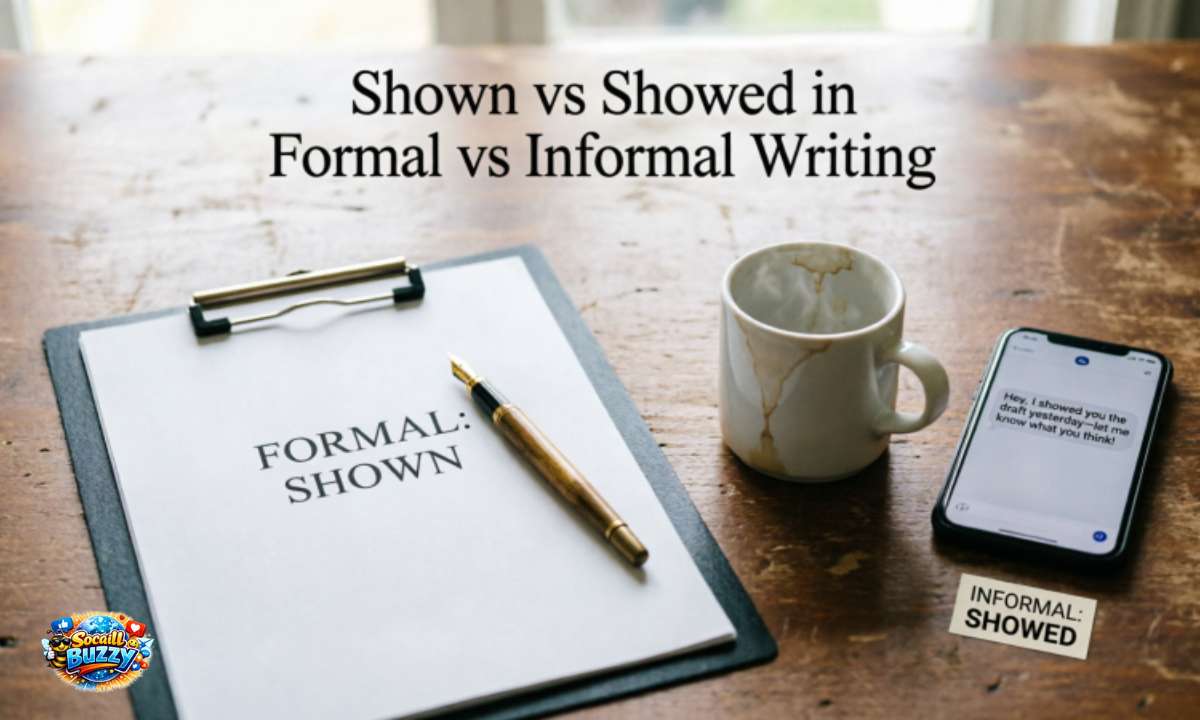
Click Here To Read Shown vs Showed
Frequently Asked Questions
Q1: Is “appreciative for” ever grammatically correct?
It appears in informal and casual speech, but it is not considered standard English and should be avoided in formal or professional writing.
Q2: Can I use “appreciative of” in an email?
Yes it is ideal for emails, cover letters, and professional correspondence.
Q3: What is the difference between “appreciative of” and “grateful for”?
Both express gratitude, but “appreciative of” emphasizes recognition of a specific quality or effort, while “grateful for” focuses on emotional thankfulness for something received.
Q4: How do I avoid confusing “appreciative of” and “grateful for”?
Remember: “grateful for” is correct; “appreciative of” is correct. Never mix them into “appreciative for.”
Q5: Is “deeply appreciative of” correct?
Yes adding intensifiers like “deeply,” “truly,” or “sincerely” before “appreciative of” is both correct and effective.
Q6: Can “appreciative of” be used in academic writing?
Absolutely it is the preferred form in academic papers, research articles, and formal reports.
Q7: Why do people say “appreciative for” if it’s wrong?
Because “grateful for” and “thankful for” are correct, people assume the same pattern applies to “appreciative.” It does not.
Q8: How common is “appreciative for” vs “appreciative of”?
“Appreciative of” appears in about 90–95% of formal written uses; “appreciative for” accounts for roughly 4–10%, mostly in informal contexts.
Q9: Should I correct someone who says “appreciative for”?
In casual conversation, it is usually not necessary. In formal writing or professional documents, yes a gentle correction improves the document’s quality.
Q10: What preposition follows “appreciative” in all formal contexts?
Always “of.” No exceptions in formal, academic, or professional English.
Conclusion: The Simple Truth About “Appreciative of” vs “Appreciative for”
The bottom line is clear: “appreciative of” is the correct, standard, and universally accepted form in formal, professional, and academic English. It follows the natural grammatical logic of English adjectives that express recognition where “of” connects the feeling to a specific source.
“Appreciative for” exists in informal speech and casual writing, often borrowed from the influence of “grateful for.” In relaxed social contexts or quick social media captions, it can pass without raising eyebrows. But in an email to a hiring manager, a cover letter, a research paper, or any situation where your language is being judged use “appreciative of.”
The good news? Once you understand why “of” works and “for” does not, you will never second-guess yourself again. English prepositions are small words with outsized importance. Getting this one right adds a quiet layer of professionalism to everything you write.
So the next time you want to express sincere acknowledgment, remember: be appreciative of what matters including proper grammar.

Welcome to SocaillBuzzy! I’m the creator and writer behind this platform, dedicated to sharing meaningful content including grammar, meaning, quotes, and inspirational messages for everyday life. Through well-crafted, SEO-friendly content, I aim to spread positivity, strengthen connections, and make it easier for readers to express their emotions with clarity and warmth.


ohdrnzztwvthlphddhrtjsgrqdiiph