

If you have ever written “post-meeting agenda” and then wondered whether it should be “pre-meeting,” you are not alone. These two tiny prefixes pre vs post- cause more confusion than almost any other element in English grammar. Yet once you understand them, they become incredibly useful tools for making your writing clear, precise, and professional.
This guide covers everything you need to know about pre vs post: their meanings, origins, rules, real-world examples across different fields, common mistakes, and how to use them correctly every time.
What Are Prefixes? A Quick Refresher
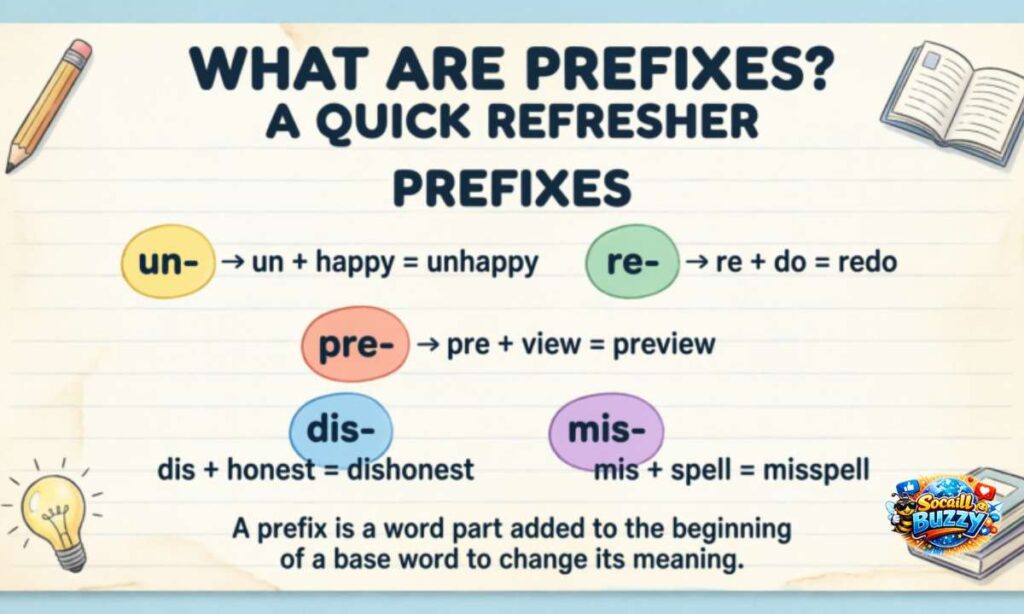
Before diving into the specifics, it helps to understand what a prefix actually is.
A prefix is a group of letters added to the beginning of a root word that changes or sharpens its meaning. Prefixes do not stand alone; they attach to existing words to create new ones. In English, most common prefixes trace back to Latin or Greek, which is why they often appear in academic, medical, and legal writing.
Think of a prefix as a signal. It tells your reader something important before they even get to the main word. And when it comes to expressing time and sequence, few prefixes do this better than pre vs post-.
What Does “Pre-” Mean?
The prefix pre- comes from the Latin word prae, meaning “before” or “in front of.” It entered English through Old French around the 14th century and has since become one of the most widely used prefixes in the language.
When you attach pre- to a word, you are signaling that something happens earlier than a reference point in advance of the main event, action, or condition.
Core meaning of pre-:
- Before in time
- In anticipation of something
- As preparation or prerequisite
- Prior to a specific event
Common examples of pre- words:
| Word | Root Word | Meaning |
| Preheat | Heat | To heat before cooking begins |
| Preview | View | To see something before its release |
| Pre-order | Order | To order before availability |
| Pre-test | Test | A test given before instruction |
| Prerequisite | Requisite | A requirement before moving forward |
| Preoperative | Operative | The phase before surgery |
| Preseason | Season | The period before the official season |
| Preschool | School | Education before formal schooling |
What Does “Post-” Mean?
The prefix post- comes directly from the Latin word post, meaning “after” or “behind.” Unlike pre vs post, which traveled through Old French, post- came into English more directly and was already in common use by the 16th century.
When you attach post- to a word, you are telling your reader that something takes place after the main event has already occurred.
Core meaning of post-:
- After in time
- Following a specific event
- Looking back on consequences or results
- In the aftermath of something
Common examples of post- words:
| Word | Root Word | Meaning |
| Postoperative | Operative | The care given after surgery |
| Postseason | Season | Games played after the regular season |
| Postgraduate | Graduate | Study undertaken after a degree |
| Post-test | Test | A test given after instruction |
| Postwar | War | The period following a conflict |
| Postmortem | Mortem | An examination after death |
| Post-launch | Launch | Activity following a product release |
| Postpone | Ponere (place) | To put off until later |
Pre vs Post: Side-by-Side Comparison

The clearest way to understand these two prefixes is to see them in parallel. Here is a direct comparison across multiple categories:
| Context | Pre- (Before) | Post- (After) |
| Education | Pre-test | Post-test |
| Medicine | Preoperative | Postoperative |
| Sports | Preseason | Postseason |
| Business | Pre-launch | Post-launch |
| Events | Pre-event setup | Post-event analysis |
| Finance | Prepaid | Postpaid |
| Career | Undergraduate | Postgraduate |
| History | Pre-war | Postwar |
| School | Preschool | Post-secondary |
| Meetings | Pre-meeting agenda | Post-meeting summary |
This table makes one thing immediately clear: pre- and post- are not random. They mirror each other perfectly. Whatever happens before has a pre- equivalent; whatever happens after has a post- equivalent.
Click Here To Read Singular vs. Plural Nouns
The Latin Origins of Pre and Post
Understanding where these prefixes come from is more than a history lesson; it actually helps you remember how to use them.
Pre vs post descends from the Proto-Indo-European root *prae, related to movement “in front of” or “forward.” Ancient Romans used it frequently: praefectus (one who is put in charge before others), praeparare (to prepare in advance), and praedicere (to say beforehand giving us “predict”).
Post- comes from the same Proto-Indo-European root *per-, but took a different directional meaning: “behind” or “after.” Romans used it in phrases like post meridiem (after midday the origin of “PM”), postscriptum (written after giving us “P.S.”), and posthumous (occurring after death).
This Latin heritage explains why both prefixes are so dominant in academic, scientific, and medical writing. Historically, Latin was the language of scholarship, and these time-indicating prefixes were essential for describing sequences of events, procedures, and conditions with precision.
How to Use Pre- and Post- Correctly: The Rules
There is one golden rule for choosing between these prefixes:
If something happens BEFORE the main event, use pre vs post. If it happens AFTER, use post-.
That sounds obvious yet people mix them up constantly, especially in professional and academic writing. Here is a practical decision framework:
Step-by-step guide to choosing the right prefix:
- Identify the main event (the surgery, the test, the meeting, the game, the launch)
- Ask yourself: Does this action happen before or after that event?
- If before: Use pre vs post
- If after: Use post-
- Double-check by replacing the prefix with the actual words “before the” or “after the” does the sentence still make sense?
Example test:
- “Pre-surgical consultation” → “Consultation before the surgery” ✅ Correct
- “Post-surgical recovery” → “Recovery after the surgery” ✅ Correct
- “Post-meeting agenda” → “Agenda after the meeting” ❌ That means the agenda after if you mean the agenda before, use pre-meeting agenda
Hyphenation Rules for Pre- and Post-
One of the most common questions about these prefixes is: should I use a hyphen?
The answer depends on the style guide you follow and the word being formed. Here is a practical summary:
When to use a hyphen:
- Before a proper noun: pre-Renaissance, post-World War II, pre-COVID
- When the word without a hyphen would be confusing or hard to read: pre vs post (not “preempt” for some style guides), post-operative vs postoperative
- When the prefix is attached to a standalone noun in professional writing: pre-meeting, post-event, pre-launch
- When two vowels collide and create ambiguity: pre- post (some style guides prefer this over “preexisting”)
When NOT to use a hyphen:
- For established, dictionary-approved compound words: preview, postwar, preschool, postpone, postgraduate
- When the word has been in use long enough to be recognized without one
Style guide differences:
| Style Guide | General Rule |
| Chicago Manual of Style | Follow Merriam-Webster; hyphenate when needed for clarity or before proper nouns |
| MLA Style | Follows Merriam-Webster; avoids hyphens unless before capital letters |
| AP Style | Avoid hyphens unless the base word is capitalized or clarity requires it |
| Medical Writing | Typically no hyphen: postoperative, preoperative, postpartum |
| Academic Writing | Varies; consistency within the document is paramount |
Bottom line: When in doubt, check a dictionary. If the word appears as a single unit (like postgraduate or preview), write it without a hyphen. If you are coining a compound for clarity in professional writing, use a hyphen.
Pre and Post in Academic Writing
Academic writing is where these prefixes do some of their heaviest lifting. Researchers, scholars, and students use pre vs post- constructions constantly, often in very specific ways.
Common academic uses:
In research and testing:
- Pre-test / Post-test measuring participants’ knowledge or performance before and after an intervention
- Pre-exposure / Post-exposure used in medical and psychological studies to describe states before and after contact with a stimulus
- Pre-survey / Post-survey data collection tools at different stages of a study
In academic structure:
- Prerequisites courses or requirements that must be completed before advancing
- Postgraduate / Post-doctoral levels of study that come after obtaining a first degree or doctorate
In historical scholarship:
- Pre-modern / Post-modern temporal divisions in art, philosophy, and cultural history
- Pre-colonial / Post-colonial frameworks for analyzing history before and after European colonization
A pre vs post design, for example, is a foundational methodology in education research. The pre-test establishes a baseline. The intervention happens. The post-test measures change. Without accurate prefix use, the entire research design becomes ambiguous.
Pre and Post in Medical Writing
Medicine is perhaps the field where accurate use of these prefixes matters most. A simple prefix error in a medical document is not just a grammatical slip it can genuinely mislead patients, caregivers, or healthcare providers.
Critical medical applications:
Pre- in medicine:
- Preoperative the assessment, preparation, and care that happens before surgery
- Prenatal relating to the period before birth
- Pre-diabetic a condition that precedes the development of Type 2 diabetes
- Premedication drugs administered before a procedure
- Prognosis a forecast of likely outcomes before they occur
Post- in medicine:
- Postoperative recovery and care that occurs after surgery
- Postnatal / Postpartum the period after childbirth
- Post-traumatic occurring as a result of trauma that has already taken place
- Postmortem an examination conducted after death
- Postdose measurements or observations taken after administering medication
Imagine giving a patient a “post-surgical consent form” instead of a “pre-surgical consent form.” That patient has already had the surgery. The form is meaningless at that point and potentially a legal issue. This illustrates exactly why prefix precision matters in professional and medical contexts.
Pre and Post in Business and Professional Writing
Beyond the lab and the clinic, these prefixes appear constantly in corporate communication, project management, and business reports.
Business applications:
Pre- in business:
- Pre-launch activities marketing, testing, and preparation before a product goes live
- Pre-approval getting authorization before making a purchase or starting a project
- Pre-order campaign allowing customers to order before a product is released
- Pre-meeting agenda the list of topics sent to attendees before a meeting starts
- Pre-qualification assessing candidates or vendors before the formal selection process
Post- in business:
- Post-launch analysis evaluating performance after a product or campaign goes live
- Post-mortem report a professional review of what went wrong (or right) after a project concludes
- Post-event follow-up communications and action items after an event
- Post-merger integration the process of combining two companies after a merger is complete
- Postpaid services plans where you pay for usage after the billing period
Sample professional email using pre vs post- correctly:
Subject: Pre-Event Checklist and Post-Event Reporting
Hi Team,
Please complete all pre-event setup tasks by Thursday afternoon. The post-event report, including attendance numbers and feedback, should be submitted within 48 hours of the closing session.
Thanks, Sarah
Clear, professional, and unmistakable. Each prefix signals exactly when the action occurs.
Common Mistakes to Avoid
Even experienced writers occasionally misuse these prefixes. Here are the most frequent errors:
1. Using the wrong prefix for the timing
❌ “Please complete the post-surgical form before your operation.” ✅ “Please complete the pre-surgical form before your operation.”
2. Redundancy doubling up the meaning
❌ “Please pre-plan in advance.” ✅ “Please plan in advance.” (or simply “pre-plan”)
Pre-plan already implies planning done ahead of time. Adding “in advance” creates a redundancy.
3. Inconsistency within a document
❌ Using “pre-test” in one section and “pretest” in another ✅ Choose one format and stick to it throughout the entire document
4. Dropping the hyphen when it causes confusion
❌ “preexisting condition” (two vowels colliding, harder to read) ✅ “pre-existing condition” (hyphen improves readability)
5. Assuming post- always needs a hyphen
❌ Always writing “post-war” when the established form is “postwar” ✅ Check the dictionary established compound words typically drop the hyphen
Pre vs Post in Everyday Language
It is not just formal writing where these prefixes matter. They appear in casual conversation, social media, entertainment, and everyday life more than most people realize.
- Pre-game (the warm-up or social gathering before the main event)
- Post-game (the analysis, celebration, or coverage after the game)
- Pre-owned (used before by another owner a polished term for “second-hand”)
- Post-credits scene (a scene appearing after the movie’s credits roll)
- Pre-heated oven (warmed up before baking)
- Post-workout meal (eaten after exercise to aid recovery)
- Pre-approved credit card (approved before you apply formally)
- Post-pandemic world (the period after the pandemic’s peak impact)
These examples show how naturally pre- and post- integrate into everyday expression. Once you train yourself to notice them, you will see them everywhere.
LSI and Related Terms: Building Your Vocabulary
Mastering pre vs post is also about expanding your understanding of related vocabulary. Here are key terms and concepts that connect to this topic:
- Prefix a word part added to the beginning of a root word
- Root word the base word to which a prefix is attached
- Word formation the process of creating new words through prefixes, suffixes, and other methods
- Timeline indicators language tools that express when something happens
- Before and after words general terms for time-sequencing language
- Latin prefix origin the Roman roots of most English prefixes
- Word morphology the study of how words are formed and structured
- Compound words words formed by combining two or more elements
- Hyphenation rules guidelines for when to include a hyphen in compound words
- Sequence words terms like prior, subsequent, preceding, and following that serve similar functions to pre- and post-
Quick Reference Summary
Before wrapping up, here is a fast-reference summary you can bookmark:
Pre- at a glance:
- Meaning: Before, in advance of, prior to
- Origin: Latin prae
- Function: Describes preparation, anticipation, prerequisites
- Examples: Preview, preheat, preoperative, pre-test, prerequisite
Post- at a glance:
- Meaning: After, following, in the aftermath of
- Origin: Latin post
- Function: Describes results, follow-up, consequences
- Examples: Postwar, postgraduate, postoperative, post-test, postmortem
Decision checklist:
- [ ] Have I identified the main event?
- [ ] Does the action happen before → use pre-
- [ ] Does the action happen after → use post-
- [ ] Have I checked whether the word needs a hyphen?
- [ ] Is my usage consistent throughout the document?
Frequently Asked Questions
Q: What is the difference between pre and post?
Pre means “before” something happens; post means “after” something happens.
Q: Do pre- and post- always need a hyphen?
Not always use a hyphen before proper nouns, for clarity, or when two vowels collide; established dictionary words often drop it.
Q: Can I use pre- and post- in formal academic writing?
Yes, both are standard in academic, medical, and professional writing.
Q: What is an example of pre vs post in medicine?
Preoperative care happens before surgery; postoperative care happens after surgery.
Q: Is “preplan” one word or two?
It is typically one word or hyphenated (pre-plan); avoid adding “in advance” alongside it to prevent redundancy.
Q: What does post-test mean?
A post-test is an assessment given after instruction or an intervention to measure what was learned or changed.
Q: Are pre- and post- antonyms?
They are not strict antonyms; they are complementary markers on a timeline, one pointing backward, one pointing forward.
Q: Where do the prefixes pre- and post- come from?
Both originate from Latin: pre- from prae (before) and post- from post (after).
Q: Can the same root word take both pre- and post-?
Yes, words like “test,” “season,” “operative,” and “launch” commonly appear with both prefixes to describe the full timeline of an event.
Q: How do I remember the difference between pre- and post-?
Think of “pre” as “prepare” you prepare before. Think of “post” as “postscript (P.S.)” added after the main letter.
Conclusion
The prefixes pre- and post– are among the most practical tools in the English language. Small in size, enormous in impact, they allow writers, speakers, students, and professionals to communicate sequences of events with clarity and precision without long explanations.
To recap: pre- signals that something happens before a main event, rooted in the Latin prae. Post- signals that something happens after, rooted in the Latin post. Together, they frame the timeline of virtually any event from a surgical procedure to a product launch, from an academic study to an everyday conversation.
Mastering pre vs post does more than improve your grammar. It makes your writing more credible, your instructions clearer, and your professional communication sharper. Whether you are drafting a medical report, writing an academic paper, composing a business email, or simply trying to sound more precise in everyday speech, these two prefixes will serve you well.

Welcome to SocaillBuzzy! I’m the creator and writer behind this platform, dedicated to sharing meaningful content including grammar, meaning, quotes, and inspirational messages for everyday life. Through well-crafted, SEO-friendly content, I aim to spread positivity, strengthen connections, and make it easier for readers to express their emotions with clarity and warmth.