
If you have scrolled through TikTok comments, opened a group chat, or read a caption on Instagram, chances are you have seen the letters “FR” show up somewhere. It looks simple, just two letters, but it carries real weight in how people talk online today.
FR meaning in text is one of the most searched slang questions of the year, and for good reason. It shows up everywhere: texts, comments, captions, gaming chats, even voice messages where people say it out loud. Yet plenty of people, especially parents, teachers, and anyone slightly outside Gen Z culture, still pause and wonder what it actually means.
This guide breaks down everything: the real definition, where FR came from, how it is used across different platforms in 2026, related slang like FRFR, and how to reply to it naturally. No fluff, just a clear and complete answer.
Quick Answer: What Does FR Mean in Text?

FR stands for “For Real.” It is internet slang used to show that someone is being sincere, serious, or in full agreement with what was just said. People add it to the end of a sentence or send it alone to confirm that a statement is true, not a joke or exaggeration.
That is the short version. Now let’s get into the details, because context changes everything with slang like this.
Read More: FYP Meaning in Text
Where Did FR Come From?
FR is not brand new. The phrase “for real” has been part of casual spoken English for decades, especially in African American Vernacular English (AAVE), where it was used to stress honesty or disbelief in everyday conversation.
The shortened version, just the letters FR, became common with the rise of texting and early social media, when character limits and typing speed pushed people to abbreviate everything. It picked up serious momentum around 2020 to 2022 as platforms like TikTok, Twitter (now X), and Discord turned it into a staple of online conversation.
By 2026, FR is not a trend anymore. It is a fixed part of digital vocabulary, the same way “lol” or “omg” became normal decades ago. Younger users grew up typing it, and it has quietly spread into casual conversation among adults too, especially in comment sections and messaging apps.
Why Did FR Become So Popular?
A few simple reasons explain why this two letter term stuck around instead of fading out like other slang:
- It is fast. Typing FR takes less effort than “for real,” which matters in quick back and forth chats.
- It fits short form content. Comments, captions, and replies on TikTok and Instagram favor brevity.
- It sounds natural. Unlike some acronyms, FR mirrors how people already speak out loud, which makes it easy to adopt.
- Influencers normalized it. Once creators and meme pages started using it constantly, it became second nature for their audiences too.
What Does FR Mean in Different Contexts?
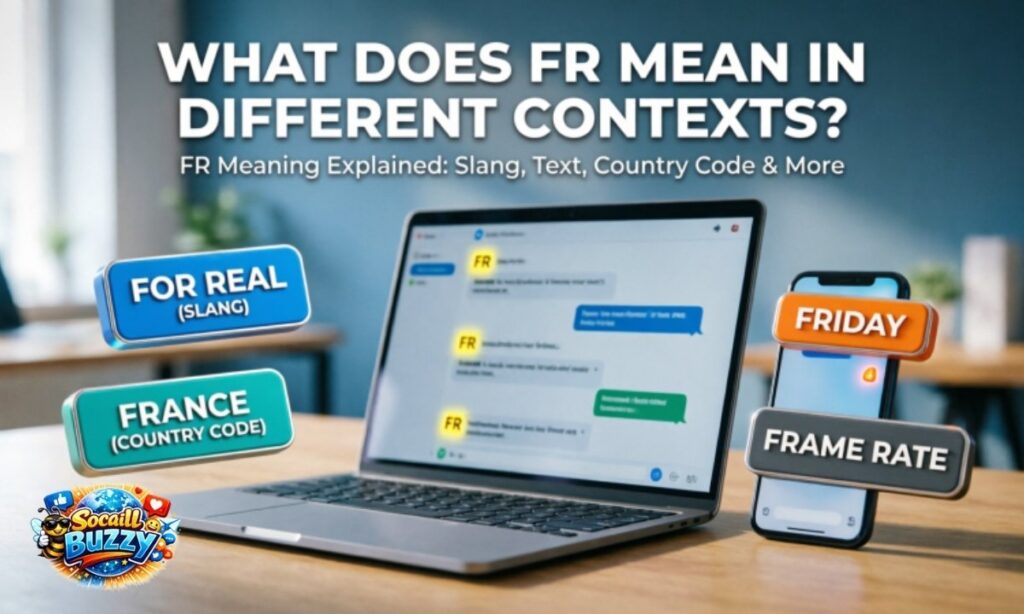
The core meaning of FR stays the same almost everywhere: for real. But the tone shifts slightly depending on where and how it is used. Here is a breakdown by platform and context.
| Platform or Context | What FR Usually Means | Example |
| Texting (iMessage, WhatsApp) | Confirming something is true or serious | “I passed the test fr” |
| TikTok comments | Agreeing with a video or relatable moment | “This is so accurate fr” |
| Instagram captions | Emphasizing authenticity of a post | “Best day ever fr” |
| Snapchat chats | Reacting to news, gossip, or a statement | “Wait fr??” |
| Discord and gaming chats | Confirming a play, result, or reaction | “That clip was insane fr” |
| X (Twitter) replies | Backing up an opinion or joke | “This tweet is underrated fr” |
Notice the pattern: FR almost never changes meaning drastically. What changes is the emotional weight behind it, whether it is used to confirm agreement, express shock, or simply add emphasis to something already said.
Read More: GNG Meaning
FR vs FRFR vs Other Similar Slang
People often confuse FR with related terms, especially FRFR. Here is a simple comparison so you never mix them up again.
| Term | Full Meaning | Intensity | Typical Use |
| FR | For Real | Standard | General agreement or sincerity |
| FRFR | For Real For Real | Stronger | Emphasizing that something is extremely true |
| NCS | No Cap (Same idea, different phrase) | Standard | Confirming no exaggeration |
| ONG | On God | Strong | Swearing something is true |
| FR ON GOD | For Real, On God | Very strong | Combines two intensifiers for maximum emphasis |
FRFR is simply a doubled up version of FR. It is used when someone wants to stress a point even harder, almost like saying “seriously, I mean it.” For example: “That movie made me cry frfr” carries more emotional weight than just “that movie made me cry fr.”
How Is FR Used in a Sentence?
FR is flexible. It can stand alone as a full reply or get tucked into a sentence for extra emphasis. Here are real world style examples across different situations.
As a standalone reply:
- “Fr?” (asking if something is actually true)
- “Fr fr” (confirming, with extra emphasis)
- “Not fr” (expressing disbelief, meaning “no way”)
At the end of a sentence:
- “That exam was way harder than I expected fr”
- “This coffee shop has the best pastries fr”
- “I need a vacation fr”
At the beginning of a sentence:
- “Fr though, that was such a good movie”
- “Fr, I did not see that coming”
In a question:
- “Wait, you actually met them fr?”
- “Fr, are you coming tonight?”
Both lowercase “fr” and uppercase “FR” mean exactly the same thing. Lowercase is more common in casual texting since it feels less like shouting and more like natural conversation.
What’s New With FR in 2026

Slang moves fast, and FR has quietly evolved in a few noticeable ways heading into 2026 that most existing guides have not caught up with yet.
FR is now common in voice and video captions, not just text. With auto captioning becoming standard on short form video platforms, FR shows up written out even in spoken content, since creators say it out loud constantly and captions transcribe it directly.
AI chat assistants and customer service bots now recognize FR as casual confirmation. As more everyday communication happens through AI powered messaging tools, several platforms have started training their language models to correctly interpret FR as sincerity rather than an unknown acronym, which was not the case a few years ago.
FR has crossed into workplace messaging apps among younger employees. Slack and Teams conversations between coworkers under 30 increasingly include casual FR usage in informal channels, though it still stays out of client facing or formal communication.
Regional variations are emerging. In some online communities, “fr fr no cap” has been shortened even further to just “no cap fr,” showing that Gen Alpha, the generation now entering their teen years, is already remixing the phrase rather than simply inheriting it unchanged.
Search interest has shifted toward parents and educators. More people searching “FR meaning in text” in 2026 are parents trying to understand their kids’ messages or teachers moderating classroom chat tools, not just teens looking it up for themselves.
Common Misunderstandings About FR
A surprising number of people misread FR the first time they see it. Here are the most common mix ups.
- Mistaking FR for “friend.” Some assume the letters stand for friend because of the shared starting letter, but that is not the meaning in slang contexts.
- Confusing FR with FYI. These look nothing alike once you know them, but new texters sometimes blend acronyms together when first learning internet slang.
- Thinking FR always means agreement. Sometimes FR is used sarcastically or jokingly, especially paired with an emoji like 😭 or 💀, which flips the tone into humor rather than sincerity.
- Assuming FR is rude. It is not disrespectful. It is simply informal, which only becomes a problem in professional or academic writing.
Context is everything here. Reading the full message, not just the acronym, tells you whether FR is being used seriously, sarcastically, or as a light joke.
Is It OK to Use FR in Professional Settings?
Short answer: generally, no. FR belongs in casual conversation, not formal writing.
In a work email, official report, or academic paper, FR reads as unprofessional and can come across as careless. If you want to express sincerity in a formal setting, use full phrases instead, such as:
- “I mean this genuinely”
- “This is accurate”
- “I want to confirm this is true”
That said, informal internal chats between coworkers, especially in younger or more relaxed workplace cultures, sometimes allow casual slang like FR without issue. The safest rule is to match the tone of the person or group you are speaking with, and default to formal language with clients, managers, or anyone outside your close team.
How to Reply to FR
Replying to FR depends entirely on what the other person is confirming. Here are natural ways to respond based on the situation.
| If Someone Says | You Could Reply |
| “This weather is insane fr” | “Fr, I can’t believe it” |
| “I’m so tired fr” | “Same, fr” |
| “Wait fr??” | “Yes, I’m serious” |
| “That was the best show fr fr” | “Facts, no cap” |
| “Fr though, that was rude” | “You’re right, that was” |
The easiest way to reply naturally is to either agree using FR yourself, or respond with a related phrase like “facts,” “no cap,” or “true” depending on the vibe of the conversation.
FR Meaning in Text: Frequently Asked Questions
What does FR mean in a text message?
FR means “for real.” People use it to confirm they are being honest, serious, or in strong agreement with something that was just said.
What does FRFR mean compared to FR?
FRFR stands for “for real, for real.” It is a doubled up, more emphatic version of FR, used when someone wants to stress that something is extremely true or important.
Is FR the same on every platform?
Mostly yes. Whether it appears on TikTok, Snapchat, Instagram, or in a regular text, FR keeps the same core meaning of sincerity or agreement. Only the tone around it shifts slightly by platform.
Does FR always mean someone agrees with you?
Not always. While FR usually signals agreement or sincerity, it can also be used sarcastically or jokingly, especially when paired with emojis. Reading the full sentence helps clarify the intended tone.
Is it rude to use FR when texting someone?
No, FR is not rude. It is simply casual slang, which means it fits informal conversations well but is best avoided in professional or formal writing.
Can adults use FR, or is it only for teens?
Anyone can use FR. While it became popular through younger generations, especially Gen Z, it has spread widely enough that adults use it casually too, particularly in texting and social media comments.
What is the difference between FR and no cap?
Both express sincerity, but they come from slightly different phrases. FR means “for real,” while “no cap” means “no lie.” People often combine them, saying “fr no cap,” to add extra emphasis.
How do you know if FR is a question or a statement?
Context and punctuation usually make it clear. “Fr?” with a question mark asks if something is true, while “fr” at the end of a sentence without punctuation usually confirms a statement.
Final Thoughts
FR is simple once you break it down: two letters that mean “for real,” used to add honesty and emphasis to a message. It shows up everywhere from texts to comments to captions, and by 2026 it has become a normal part of how people, not just teens, communicate online.
The key thing to remember is context. FR usually signals sincerity or agreement, but tone, punctuation, and emojis can shift its meaning toward sarcasm or humor. Once you get comfortable reading those cues, you will never be confused by an FR text again.

Welcome to SocaillBuzzy! I’m the creator and writer behind this platform, dedicated to sharing meaningful content including grammar, meaning, quotes, and inspirational messages for everyday life. Through well-crafted, SEO-friendly content, I aim to spread positivity, strengthen connections, and make it easier for readers to express their emotions with clarity and warmth.