If you’ve ever typed out a quick email or text and paused fingers hovering wondering whether to write “hassle” or “hastle,” you’re in good company. This particular spelling question trips up students, professionals, and native English speakers alike. The confusion is understandable, but the answer is definitive.
This guide breaks down everything you need to know about hassle vs hastle the correct spelling, the real meaning, the fascinating origin story, grammar rules, real-world examples, and memory tricks so you’ll never mix them up again. Whether you’re writing a formal report, a casual social media post, or a professional email, getting this right matters more than most people realize.
What Is the Correct Spelling: Hassle or Hastle?
Let’s settle this immediately.
✅ Hassle Correct spelling, recognized in all major dictionaries
❌ Hastle Incorrect spelling, not a real English word
“Hastle” does not appear in the Oxford English Dictionary, Merriam-Webster, Cambridge Dictionary, or any other reputable reference. It is purely a phonetic misspelling of a word that sounds plausible but has no standing in standard English grammar or vocabulary.
The correct form is always a hassle, with a double “s” and no “t.”
Quick-Reference Summary Table
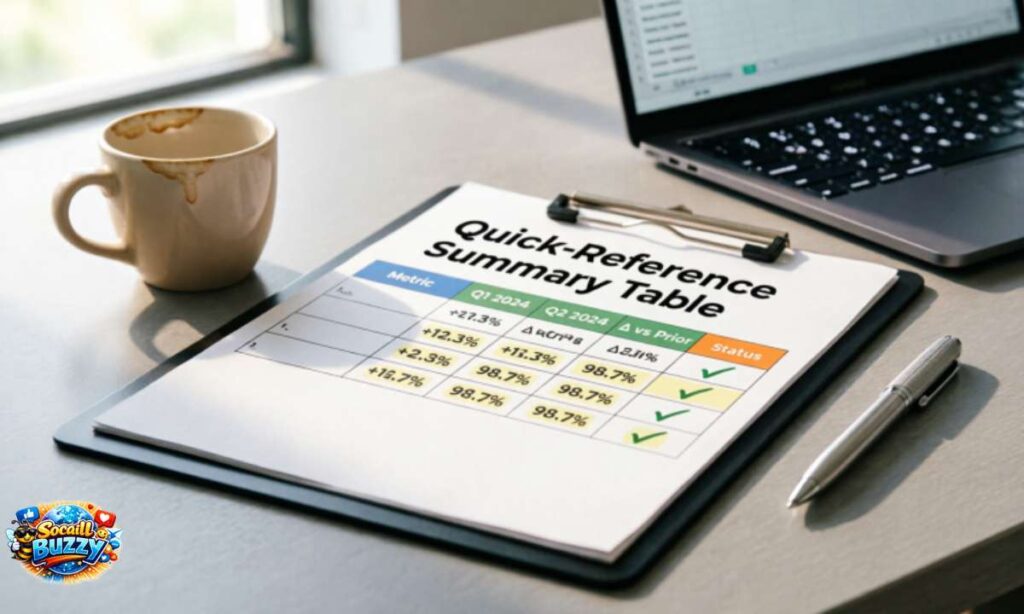
| Feature | Hassle | Hastle |
| Correct Spelling | ✅ Yes | ❌ No |
| Found in Dictionary | Yes (OED, Merriam-Webster, Cambridge) | No |
| Part of Speech | Noun and Verb | N/A not a real word |
| Used in Formal Writing | Yes | Never |
| Used in Professional Documents | Yes | Avoid entirely |
| Common Misspelling | No | Yes very common online |
What Does Hassle Mean?
The word hassle is genuinely versatile. It works as both a noun and a verb, which is part of what makes it so useful in everyday communication.
Hassle as a Noun
As a noun, a hassle refers to an irritating, inconvenient, or unnecessarily complicated situation, one that takes up more time, effort, or energy than it should. It often carries a tone of mild frustration rather than outright disaster.
Examples:
- “Renewing my passport was such a hassle the online system kept crashing.”
- “Finding parking downtown is always a hassle on weekdays.”
- “Dealing with the insurance company after the accident was a total hassle.”
- “The hassle of commuting every day eventually made her switch to remote work.”
Hassle as a Verb
As a verb, to hassle someone means to bother, pester, or pressure them persistently often to the point of annoyance. This usage is slightly more informal but is widely accepted in both British and American English.
Examples:
- “Please stop hassling me about the report. I’ll finish it by Friday.”
- “The salesperson wouldn’t stop hassling customers as they walked past the stall.”
- “She felt constantly hassled by her manager’s micromanaging style.”
- “Don’t hassle your sister while she’s studying.”
Click Here To Read A MA or An MA
Why Do People Write “Hastle” Instead of “Hassle”?
Understanding why this misspelling happens is just as important as knowing the correct form. There are several well-documented reasons:
1. Phonetic Confusion with Similar Words
English is full of words ending in “-stle” that are pronounced with a soft or silent consonant. Think about:
- Castle (pronounced “CAS-ul”)
- Hustle (pronounced “HUS-ul”)
- Wrestle (pronounced “RES-ul”)
- Jostle (pronounced “JOS-ul”)
When people hear “hassle” in casual speech particularly at speed the brain automatically reaches for a familiar pattern. Because hustle, castle, and jostle all end in “-stle,” the mind fills in the “t” that isn’t actually there.
2. Influence of the Word “Hustle”
The words hassle and hustle are particularly easy to confuse. They sound similar, they’re both informal, and they can both describe frantic, energetic, or difficult situations. This overlap frequently causes writers to produce a mental blend ending up with “hastle” as a sort of hybrid between the two.
3. Fast Typing and Auto-Correct Failures
In the age of smartphones and quick digital communication, typing errors are incredibly common. Auto-correct doesn’t always catch “hastle” because it can register as a proper noun (such as a surname) rather than flagging it as a misspelling. Once the error slips through uncorrected, it gets repeated and reinforced.
4. Spread Through Online Content
When misspellings appear in popular online content social media posts, comment sections, informal blogs they get indexed, shared, and repeated. Readers see “hastle” enough times that it starts to look normal. This is how phonetic errors gain false credibility on the internet.
The Origin and History of the Word “Hassle”
The etymology of “hassle” is more interesting than you might expect, and understanding where it comes from helps explain why it’s spelled the way it is.
According to the Online Etymology Dictionary, hassle first appeared in American English in 1945, documented in Down Beat, a jazz music magazine. Early on, it was noted in The Saturday Evening Post (1946) as “a gorgeously descriptive word which lately has won wide usage in show business.”
Several theories exist about the word’s precise origin:
- Blend word theory: Linguists have proposed that “hassle” may be a blend of words like haggle and tussle, or harass and hustle all of which describe some form of persistent, effortful struggle.
- Southern American dialectal roots: The Oxford English Dictionary traces an early verb form of “hassle” to 1928, recorded in American Speech as a Southern U.S. dialect word meaning “to breathe or pant noisily.”
- Hatchel connection: Some etymologists suggest a link to the word hatchel, a tool used to comb out flax or hemp fibers, a process notoriously tedious and irritating, much like modern “hassles.”
Over time, the word broadened from its original meaning of squabble or argument to describe any situation involving unnecessary inconvenience or effort. By the late twentieth century, hassle had become a core word in everyday English across both American and British usage.
Hassle vs Hastle: Side-by-Side Comparison
| Aspect | Hassle | Hastle |
| Definition | Inconvenience, trouble, irritation; to bother or pester | No definition does not exist |
| Spelling Pattern | Double “s,” ends in “-le” | Incorrect insertion of “t” |
| Accepted by Dictionaries | OED, Merriam-Webster, Cambridge | None |
| Appropriate for Formal Writing | Yes | No |
| Appropriate for Academic Writing | Yes (with care) | No |
| Appears in Published Media | Extensively | Rarely, only as error |
| First Recorded Use | 1945 (American English) | Never misspelling only |
How to Use “Hassle” Correctly in a Sentence
Knowing the right word is only half the battle. Using it correctly in context is what separates good writers from great ones.
As a Noun Sentence Patterns
Pattern 1: Subject + is/was + a (real/total/big) hassle
“Replacing a lost credit card is always a hassle.”
Pattern 2: The hassle of + [activity]
“The hassle of airport security has made many people choose train travel.”
Pattern 3: Without the hassle of + [activity]
“Online banking lets you manage your money without the hassle of visiting a branch.”
Pattern 4: It’s not worth the hassle
“Going back to complain is probably not worth the hassle at this point.”
As a Verb Sentence Patterns
Pattern 1: [Person] + hassled + [person] + about + [topic]
“Her landlord was hassling her about the late rent.”
Pattern 2: Stop hassling + [person]
“Stop hassling me, I’ve already said I’ll handle it.”
Pattern 3: Feel/get hassled
“She didn’t want to feel hassled every time she walked into the shop.”
Common Phrases and Idioms Using “Hassle”
The word “hassle” appears in a number of common English expressions. Here are the ones you’re most likely to encounter:
- “No hassle” Easy, uncomplicated, without difficulty. Often used in marketing: “Returns are no hassle with our 30-day policy.”
- “Too much hassle” More effort or trouble than it’s worth: “Cooking a full roast for just two people feels like too much hassle.”
- “Not worth the hassle” The effort required outweighs the benefit: “Chasing that refund for £3 just isn’t worth the hassle.”
- “Skip the hassle” A call to action encouraging simplicity: “Book online and skip the hassle of waiting in line.”
- “Take the hassle out of” To make something easier: “This app takes the hassle out of expense reporting.”
Hassle vs Similar Words: Understanding the Differences
Writers sometimes swap “hassle” for words that don’t quite fit. Here’s a clear breakdown of related terms and when to use each one:
| Word | Meaning | When to Use |
| Hassle | Minor inconvenience or irritation; to bother persistently | Informal and semi-formal; everyday situations |
| Inconvenience | Something that causes discomfort or difficulty | More formal contexts |
| Nuisance | A persistent annoyance or pest | When emphasizing the repetitive or ongoing nature |
| Bother | Light disturbance or trouble | Very casual, especially British English |
| Hustle | Fast, energetic work or movement; to hurry | Positive effort and speed very different meaning |
| Ordeal | A very difficult or painful experience | Much more serious than a hassle |
| Aggravation | A source of frustration or worsening of a situation | Stronger emotional weight than hassle |
Memory Tricks: How to Always Spell “Hassle” Correctly
Spelling errors are easy to prevent when you have the right tools. Here are some of the most effective memory devices for locking in the correct spelling:
Trick 1: The Double-S Stress Reminder
Think of the double “s” as two tiny stress symbols. A hassle causes stress and “hassle” has double the s.
“Hassle Has Solid Spelling double S for double Stress.”
Trick 2: Castle Without the T
“Hassle” and “castle” share a similar ending, but notice that “hassle” has no “t”:
Castle → Hastle → ❌ Wrong
Has + sle → Hassle → ✅ Correct
Once you visualize “castle without the t,” the correct form becomes intuitive.
Trick 3: Phonetic Breakdown
Say the word out loud slowly: /ˈhæs.əl/
You’ll notice there is no “t” sound anywhere in the pronunciation. If there’s no “t” sound, there’s no “t” in the spelling.
Trick 4: Association
Associate “hassle” with “tassel” both end in “-ssel” (sound-wise) and both are two-syllable words with a double consonant before the “-le”:
- Tassel = t + a + ss + le
- Hassle = h + a + ss + le
When “Hassle” Is and Isn’t Appropriate
While “hassle” is now widely accepted in both spoken and written English, it still carries an informal tone. Here’s a quick guide to when it’s the right choice and when you might want a more formal alternative.
When “Hassle” Works Well:
- Casual conversation and text messages
- Informal emails between colleagues
- Social media content and blog posts
- Marketing copy aimed at everyday consumers
- Dialogue in fiction and creative writing
- News articles and feature journalism
When to Consider an Alternative:
- Academic papers and scholarly essays
- Legal documents and contracts
- Highly formal business correspondence
- Official government or institutional writing
In formal settings, consider replacing “hassle” with: inconvenience, complication, difficulty, burden, or impediment depending on the specific context.
Real-World Examples from Published Sources
One of the best ways to cement correct spelling and usage is to see the word in action across reputable published material.
- “Changing trains with all that luggage was a real hassle.” The Times
- “Package holidays take all the hassle out of travel arrangements.” The Sun
- “Selling online saves money and saves hassle.” Collins English Dictionary examples
- “Booking hire cars in advance will save money and hassle.” Sunday Times
- “The hassle and cost will be unimaginable.” Daily Mail
Notice that in every single published, professionally edited example, the word is spelled hassle not “hastle.” This consistency across decades of journalism, literature, and professional writing confirms beyond any doubt that there is only one correct form.
Hassle in Pop Culture and Everyday Life

Part of what makes “hassle” such a rich word is how deeply embedded it has become in everyday culture.
In film and television, characters routinely say “Don’t hassle me” in everything from sitcoms to crime dramas; the phrasing has become almost iconic in casual American dialogue. Advertisers love the word too: phrases like “Skip the hassle,” “No-hassle returns,” and “Hassle-free booking” appear in campaigns for everything from airlines to insurance companies to online retailers.
The word’s versatility equally at home in a frustrated complaint as in a brand promise explains why it’s stuck around since its 1940s debut in jazz culture. From Down Beat magazine to digital marketing copy, hassle has proven itself one of the more durable words in modern English.
Frequently Asked Questions
Q: Is “hastle” ever acceptable in any context?
A: No “hastle” is never correct in any variety of English. It is always a misspelling.
Q: What is the plural of hassle?
A: The plural is “hassles,” as in “daily hassles” or “work-related hassles.”
Q: Can “hassle” be used in formal writing?
A: It can, though in highly formal contexts a word like “inconvenience” or “complication” may be more appropriate.
Q: What is the difference between “hassle” and “hustle”?
A: They are completely different words. Hassle means trouble or annoyance; hustle means to work energetically or move quickly.
Q: Is “hassle-free” hyphenated?
A: Yes when used as a compound adjective before a noun, it is hyphenated: “a hassle-free experience.” Used predicatively, no hyphen is needed: “The process was hassle free.”
Q: What part of speech is “hassle”?
A: Hassle functions as both a noun (“what a hassle”) and a verb (“stop hassling me”).
Q: Is “hassle” British or American English?
A: It originated in American English but is now standard in both British and American usage.
Q: How do you pronounce “hassle”?
A: It is pronounced /ˈhæs.əl/ two syllables, with the stress on the first: HAS-ul.
Q: Can you say “a lot of hassle” or “much hassle”?
A: Both are correct. “A lot of hassle” is more conversational; “much hassle” is slightly more formal.
Q: Why does spell-check sometimes miss “hastle”?
A: Some spell-checkers may recognize “Hastle” as a proper noun (a surname), which is why manual proofreading still matters.
Conclusion: Always Choose “Hassle”
The debate between hassle vs hastle has a clear winner and it’s not even close.
Hassle is the only correct spelling in standard English. It appears in every major dictionary, has a documented history stretching back to 1945, and is used consistently in professional publishing, journalism, literature, and everyday communication across the English-speaking world.
Hastle, on the other hand, is simply a misspelling, a common one, driven by phonetic habits and the influence of similar words like “hustle” and “castle,” but a misspelling nonetheless. It carries no definition, appears in no reputable dictionary, and using it in professional or academic writing can quietly undermine your credibility.
The fix is simple: next time you reach for this word, remember the double “s,” think of the stress it represents, and write with confidence. Whether you’re describing the frustration of a slow checkout line, the inconvenience of a complicated return policy, or the daily irritations of a long commute hassle is your word.

Welcome to SocaillBuzzy! I’m the creator and writer behind this platform, dedicated to sharing meaningful content including grammar, meaning, quotes, and inspirational messages for everyday life. Through well-crafted, SEO-friendly content, I aim to spread positivity, strengthen connections, and make it easier for readers to express their emotions with clarity and warmth.