Have you ever typed “that’s mean” when you actually wanted to say “that means”? Or heard someone say one phrase and wondered which one they were going for? You’re not alone. These two expressions trip up English learners every single day and even some native speakers get caught off guard.
Here’s the truth: the difference between “that’s mean” and “that means” is not subtle, it’s fundamental. One talks about how someone is behaving. The other explains a consequence or result. Mixing them up doesn’t just sound a little off, it can completely flip the meaning of your sentence, or worse, accidentally make you sound rude.
This guide breaks everything down clearly. You’ll get definitions, grammar explanations, real-life examples, comparison tables, common mistakes, and practical tips to make sure you never confuse these two again.
What Is the Core Difference Between “That’s Mean” and “That Means”?
Before we go deep, here’s the one-line answer:
“That’s mean” = someone or something is unkind or cruel. “That means” = something explains, implies, or results in something else.
That’s the whole thing. But understanding why they work this way makes the difference stick so let’s look at each one properly.
Understanding “That’s Mean” – Definition, Grammar & Usage
What Does “That’s Mean” Actually Say?
“That’s mean” is a contraction. “That’s” is short for “that is.” So when you say “that’s mean,” you’re saying “that is mean.”
Here, the word “mean” is an adjective. It describes something as unkind, cruel, harsh, or unfair. The sentence structure follows a classic linking verb pattern:
Subject (That) + Linking Verb (is) + Predicate Adjective (mean)
The linking verb “is” connects the subject “that” with the describing word “mean.” This is the same structure as saying “the weather is cold” or “her tone was rude.”
When Should You Use “That’s Mean”?
Use “that’s mean” when you want to describe a behavior, comment, action, or attitude as hurtful or unkind. It’s an emotional judgment, a reaction to something someone said or did.
Common situations where “that’s mean” fits naturally:
- Responding to a rude joke: “You called him ugly in front of everyone? That’s mean.”
- Reacting to unfair treatment: “They excluded her from the group chat? That’s mean.”
- Calling out sarcastic behavior: “Making fun of his mistake like that that’s mean.”
- Expressing disapproval of a comment: “Don’t say that about her. That’s mean.”
Click Here To Read “On the Plane” or “In the Plane”
“That’s Mean” Grammar Breakdown
| Element | Role | Example |
| That | Subject (pronoun) | Refers to an action or behavior |
| ‘s (is) | Linking verb | Connects subject to description |
| Mean | Predicate adjective | Describes the behavior as unkind |
Multiple Meanings of “Mean” as an Adjective
It’s worth noting that “mean” as an adjective doesn’t only apply to cruelty. Depending on context, it can also mean:
- Unkind or cruel: “That’s mean to say.”
- Stingy or ungenerous: “He’s so mean with money.”
- Impressive or skilled (informal British English): “She plays a mean guitar.”
In everyday American and global English, the most common usage in the phrase “that’s mean” is to describe something as unkind or hurtful.
Understanding “That Means” – Definition, Grammar & Usage
What Does “That Means” Actually Say?
“That means” is a completely different structure. Here, “means” is a verb specifically, the third-person singular present form of the verb “to mean.”
Subject (That) + Action Verb (means) + explanation or result
There is no contraction here. “That” is the subject, and “means” is the main verb of the sentence. The sentence goes on to explain something a consequence, a definition, a logical result, or a clarification.
When Should You Use “That Means”?
Use “that means” when you are connecting one piece of information to a conclusion, explanation, or result. It’s a logical, informational phrase not emotional.
Common situations where “that means” fits:
- Explaining a result: “The meeting’s cancelled. That means we have the afternoon free.”
- Clarifying information: “She passed the exam. That means she’s ready for the next level.”
- Describing a consequence: “It’s raining heavily. That means the event may be delayed.”
- Making a deduction: “He hasn’t replied in three days. That means he’s probably busy.”
“That Means” Grammar Breakdown
| Element | Role | Example |
| That | Subject (pronoun/demonstrative) | Refers to a situation or fact |
| Means | Action verb (third person singular) | Expresses explanation or implication |
| Clause/Object | What is being explained or implied | “we need to leave early” |
Side-by-Side Comparison: That’s Mean vs That Means
Here’s a full comparison table to make the differences crystal clear at a glance:
| Feature | That’s Mean | That Means |
| Full form | That is mean | That means (no contraction) |
| Grammar role | Linking verb + adjective | Subject + action verb |
| Function | Describes behavior as unkind | Explains a result or consequence |
| Tone | Emotional / reactive | Logical / informational |
| Typical context | Social situations, reactions | Explanations, conclusions |
| Word “mean” | Adjective (unkind) | Part of verb “to mean” |
| Example | “That’s mean of you.” | “That means we’re late.” |
| Key question | Is something unkind? | What follows from this? |
Real-Life Example Sentences – See the Difference in Action
Sometimes the fastest way to understand something is to see it working in real conversations. Here’s a side-by-side look at how these phrases function in daily life.
“That’s Mean” in Context
- “You told everyone her secret? That’s mean.”
- “They laughed at his presentation instead of clapping. That’s mean.”
- “He never texts back on purpose just to make her wait. That’s mean.”
- “Leaving her name off the team list was really mean.”
- “Stop picking on him, that’s mean and you know it.”
“That Means” in Context
- “The train is running 30 minutes late. That means I’ll miss my connection.”
- “She got promoted again. That means she’s clearly excelling at her job.”
- “The app requires iOS 16 or above. That means older phones won’t support it.”
- “No one showed up to the meeting. That means we need to reschedule.”
- “He scored 98 on the test. That means he’s ready for the advanced class.”
In the Same Conversation
Notice how both phrases can appear naturally in one short exchange:
Alex: “Did you hear? Jake told everyone she failed the interview.” Sam: “Wow, that’s mean. He didn’t have to do that.” Alex: “Yeah. And she’s applying elsewhere now. That means she’s not giving up.”
In that conversation, “that’s mean” judges Jake’s behavior, while “that means” draws a logical conclusion about the girl’s next steps.
Common Mistakes People Make (And How to Fix Them)
Mistake #1 Using “That’s Mean” When You Want to Explain Something
Wrong: “He’s already arrived. That means we can start.” Right: “He’s already arrived. That means we can start.”
Why? Because you’re drawing a conclusion and an explanation not judging anyone’s character.
Mistake #2 Using “That Means” When Reacting to Unkind Behavior
Wrong: “You hid her keys as a prank? That means.” Right: “You hid her keys as a prank? That’s mean.”
Why? Because you’re making an emotional judgment about something unkind, “mean” here is an adjective.
Mistake #3 Forgetting the Apostrophe in Writing
Wrong: “That’s mean of you.” Right: “That’s mean of you.”
In spoken English, the missing apostrophe won’t be noticed. But in writing, forgetting the apostrophe in “that’s” is a noticeable grammar error.
Mistake #4 Treating Both Phrases as Interchangeable
Because they sound so similar, some learners assume they can be swapped freely. They cannot. The verb structure and intended meaning are fundamentally different.
The quick fix: Ask yourself one question before you speak or write:
Am I describing unkind behavior? → Use “That’s mean.” Am I explaining a result or consequence? → Use “That means.”
Pronunciation Tips – Hearing the Difference
In fast, natural speech, “that’s mean” and “that means” can sound almost identical to a non-native ear. Here’s how to hear the difference:
- “That’s mean” you’ll hear a slight pause or stop after “that’s” before the adjective. The “s” belongs to the contraction “that is.” The stress tends to fall on “MEAN” to emphasize the judgment.
- “That means” the word “flows directly after “that” with no break. The “s” on “means” is part of the verb itself. The sentence usually continues with a clause.
Say them out loud:
- “That’s [pause] MEAN.” emotional, reactive, stops there or continues with “of you.”
- “That means [flows on] we have to go.” explanatory, always followed by what it means.
Listening to native speakers in TV shows, podcasts, and real conversations is one of the best ways to internalize this difference.
Synonyms and Alternatives for Each Phrase
Alternatives for “That’s Mean”
When you want to express that something is unkind or hurtful, you can also say:
- “That’s cruel.”
- “That’s unkind.”
- “That’s hurtful.”
- “That’s not very nice.”
- “That’s harsh.”
- “That’s heartless.”
Alternatives for “That Means”
When you want to explain a consequence or draw a conclusion, you can also say:
- “That implies…”
- “That suggests…”
- “That indicates…”
- “That shows…”
- “In other words…”
- “So basically…”
- “That tells us…”
Having these alternatives in your vocabulary gives you more flexibility especially when you’re writing and want to avoid repeating the same phrase.
Why This Confusion Is So Common and Nothing to Be Ashamed Of
The reason so many English learners mix these two up comes down to a few overlapping factors:
1. Visual similarity Both phrases start with “that” and contain the letters M-E-A-N. To someone skimming quickly, they look nearly identical.
2. Phonetic closeness In spoken English, especially at natural conversational speed, the difference between “that’s mean” and “that means” is a fraction of a second. The added “s” at the end of “means” is easy to miss.
3. The word “mean” has multiple meanings. “Mean” can be an adjective (unkind), a verb (to signify), a noun (an average in math), or even an informal compliment in British English. This polysemy makes it one of the most context-dependent words in English.
4. Contraction confusion Many learners are still getting comfortable with contractions like “that’s,” “it’s,” “there’s.” Mixing up contractions with full word forms is one of the most documented patterns in ESL grammar errors.
None of this makes the mistake a sign of poor English. It’s simply a quirk of the language that deserves a clear explanation which is exactly what this guide is for.
Quick-Reference Decision Chart
Use this mental checklist whenever you’re unsure which phrase to use:
Step 1: What are you trying to do?
- 👉 Are you reacting to something unkind, rude, or unfair? → Go to Step 2A
- 👉 Are you explaining a result, consequence, or definition? → Go to Step 2B
Step 2A – Confirming “That’s Mean”:
- Does replacing “mean” with “unkind” still make sense?
- ✅ Yes → Use “That’s mean.”
- ❌ No → Reconsider
Step 2B – Confirming “That Means”:
- Can you replace “that means” with “that implies” or “so therefore”?
- ✅ Yes → Use “That means.”
- ❌ No → Reconsider
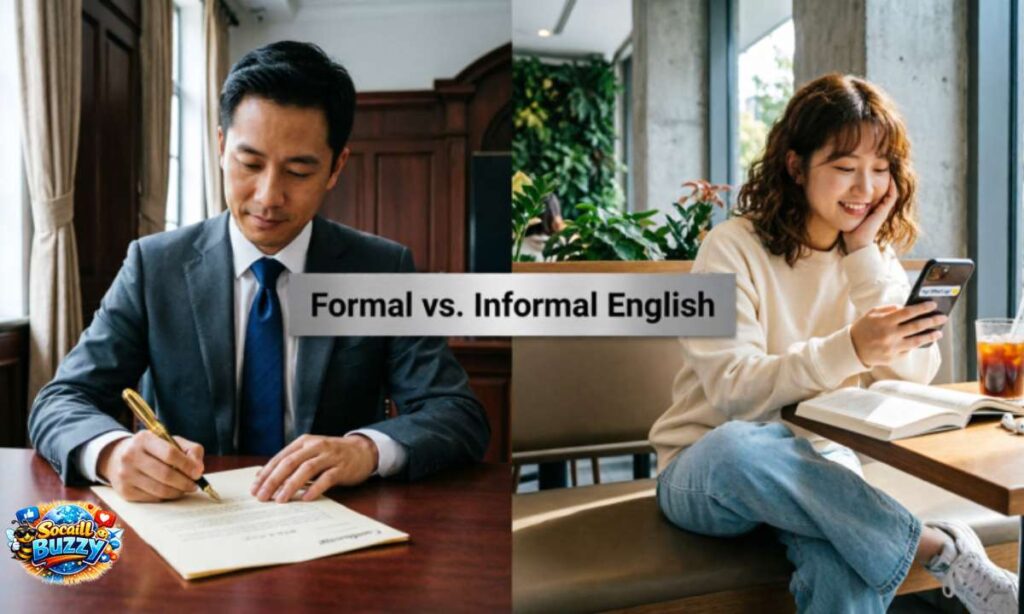
Usage in Formal vs. Informal English
“That’s Mean” Predominantly Informal
“That’s mean” is used almost entirely in spoken, informal English. You’ll hear it in everyday conversations, text messages, social media comments, and casual storytelling. It rarely appears in formal writing or professional contexts.
If you’re writing an academic essay or business report and need to describe unkind behavior, you’d typically use more formal alternatives: “This action was unkind,” or “the behavior was unprofessional and hurtful.”
“That Means” Used in Both Formal and Informal Contexts
“That means” is far more versatile. You’ll find it in:
- Casual conversation: “He’s not picking up. That means he’s probably sleeping.”
- Academic writing: “The data shows a 12% drop, which means the trend is reversing.”
- Business communication: “The budget has been cut. That means we’ll need to reprioritize.”
- Technical explanations: “The error code 404 means the page wasn’t found.”
A Note on “Does That Mean” The Question Form
You might also encounter the question form: “Does that mean…?”
This follows the same logic as “that means” it’s asking for explanation or clarification about a result or consequence.
- “You’re not coming to the party. Does that mean you’re still upset?”
- “The price dropped by half. Does that mean there’s something wrong with it?”
The question form is perfectly natural in both spoken and written English. It doesn’t change into “Is that mean?” unless you’re literally asking whether something is unkind which would be a different question entirely
Frequently Asked Questions (FAQs)
Q: Is “that’s mean” formal or informal English?
A: It’s almost exclusively informal; you’ll use it in everyday conversation, not formal or professional writing.
Q: Can I say “that is mean” instead of “that’s mean”?
A: Yes, they mean exactly the same thing. “That’s” is simply the contracted form of “that is.”
Q: What’s the difference between “mean” as an adjective and “mean” as a verb?
A: As an adjective, “mean” describes unkindness. As a verb, “to mean” expresses what something signifies or implies.
Q: Can “that means” ever be used to talk about behavior?
A: Only indirectly for example, “That means he’s being unkind.” But “that means” itself doesn’t judge behavior; it draws a conclusion.
Q: Is it ever correct to say “that’s means”?
A: No “that means” is always incorrect. You either use “that’s mean” or “that means,” not a combination of both.
Q: Can “mean” ever be positive?
A: Yes! In informal British English, saying someone “plays a mean guitar” means they’re excellent at it. Context always matters.
Q: Why does “means” end in “s” in “that means”?
A: Because “that” is a third-person singular subject, and in present tense English, third-person singular verbs take an -s ending: he means, she means, it means, that means.
Q: How do I stop confusing these two in spoken English?
A: Practice saying both phrases out loud. If your sentence is about behavior → “that’s mean.” If your sentence is about explanation → “that means.”
Conclusion
Mastering the difference between “that’s mean” and “that means” is one of those small grammar wins that makes a noticeable difference in how natural your English sounds.
Here’s the bottom line, one final time:
- “That’s mean” = That is mean. It’s an emotional reaction to unkind or hurtful behavior. “Mean” here is an adjective.
- “That means” = That explains, implies, or results in something. It’s a logical, informational phrase. “Means” here is a verb.
One tiny apostrophe, one letter “s” and two completely different messages. The next time you reach for either phrase, pause for one second and ask yourself: am I reacting to something unkind, or am I explaining something? That single question will lead you to the right answer every time.
Keep practicing, keep reading, and trust that every small grammar lesson you internalize brings your English one step closer to truly fluent.
Welcome to SocaillBuzzy! I’m the creator and writer behind this platform, dedicated to sharing meaningful content including grammar, meaning, quotes, and inspirational messages for everyday life. Through well-crafted, SEO-friendly content, I aim to spread positivity, strengthen connections, and make it easier for readers to express their emotions with clarity and warmth.