
If you have ever paused mid-sentence wondering whether to write “accumulative effects” or “cumulative effects,” you are not alone. These two words trip up students, writers, and even seasoned professionals every day. They look nearly identical, share overlapping meanings, and both deal with the idea of things building up over time yet using the wrong one in a formal context quietly signals imprecision.
This guide breaks down everything you need to know about ac.cumulative vs cumulative: their definitions, origins, usage rules, real-world examples, and the clear tricks that will help you choose correctly every single time.
What Is the Core Difference Between Accumulative and Cumulative?
At the heart of this comparison lies one clean distinction:
- Accumulative focuses on the process the ongoing act of gathering, collecting, or building up over time.
- Cumulative focuses on the result the measurable total or final sum produced by successive additions.
Think of it this way: ac.cumulative describes what is happening, while cumulative describes what has happened.
| Feature | Accumulative | Cumulative |
| Focus | Process / behavior / tendency | Total / result / outcome |
| Emphasis | Gradual gathering over time | Sum of successive additions |
| Common contexts | Stress, habits, knowledge, organic growth | GPA, statistics, finance, law |
| Frequency of use | Rare in formal writing | Very common in academic and professional writing |
| Interchangeable? | Rarely only in informal contexts | Yes, often preferred over accumulative |
| Latin root | accumulare (to heap up) | cumulare (to heap) |
Definitions: Breaking Down Each Word

What Does “Cumulative” Mean?
Cumulative is an adjective that describes something growing or increasing through a series of successive additions. Each step adds to the previous one, producing a larger running total or measurable outcome.
Merriam-Webster defines cumulative as “increasing or becoming better or worse over time through a series of additions.” Oxford Dictionary echoes this, describing it as “increasing or increased in quantity, degree, or force by successive additions.”
Key features of cumulative:
- It implies structured, step-by-step addition
- The focus is on the final total or aggregate
- It answers the question: What is the sum?
- It thrives in data-driven, measurable contexts
Examples of cumulative in sentences:
- Her cumulative GPA at the end of four years was 3.87.
- The cumulative rainfall for the region reached 240 mm in October.
- Researchers tracked the cumulative exposure to the chemical over a decade.
- The team’s cumulative score across all five rounds was 412 points.
Click Here To Read Sweetie vs Sweety vs Sweatie
What Does “Accumulative” Mean?
Accumulative is also an adjective, but it highlights the tendency or process of accumulating. It refers to something that gathers or grows organically over a period, often without a structured sequence of additions.
Merriam-Webster defines acc.umulative as “tending or given to increase or growth by addition, especially when continuous or repeated.” It also offers a secondary, shorter definition: “cumulative.” The fact that a major dictionary uses one word to define the other tells you that in everyday use, these terms are remarkably close but they are not identical in precise, professional writing.
Key features of acc.umulative:
- It implies an ongoing, organic process of collection
- The focus is on the act of gathering, not the final number
- It answers the question: How is it building up?
- It often describes behavior, tendencies, habits, or organic phenomena
Examples of accumulative in sentences:
- The accumulative stress of late nights and poor nutrition eventually wore him down.
- Warren Buffett’s acc.umulative investing instincts have made him one of the wealthiest people alive.
- Her accumulative knowledge of the subject came from years of independent reading.
- The acc.umulative effects of smoking cause permanent damage long before symptoms appear.
Word Origins: Where Do These Words Come From?
Understanding etymology often makes the difference between knowing a rule and truly understanding it.
Both words trace their roots to Latin:
- Cumulative comes from the Latin cumulare, meaning “to heap” or “to pile up.” This root also gives us the word cumulus (the heaping cloud shape). The idea is one of stacking things sequentially, one on top of another.
- Acc.umulative comes from the Latin accumulare, formed by adding the prefix ad- (toward) to cumulare. Accumulare means “to heap up toward something” emphasizing the ongoing movement of collecting toward a goal or result.
This etymology reinforces the distinction: cumulative is about the heap itself (the result), while acc.umulative describes the act of heaping (the process).
How Frequently Are These Words Used?
Usage data from language corpora and dictionaries consistently shows that cumulative is far more common in both formal and informal writing. Here is a rough sense of the frequency gap:
| Context | Preferred Word |
| Academic writing (research papers) | Cumulative |
| Business reports and financial documents | Cumulative |
| Legal documents | Cumulative |
| Medical and scientific studies | Cumulative |
| Casual conversation about habits/tendencies | Accumulative |
| Personal development writing | Either |
| Statistics and data analysis | Cumulative |
The rarity of ac.cumulative in formal writing is significant. In most professional contexts, cumulative has effectively absorbed acc.umulative’s meaning. If you are writing an academic paper, financial report, or legal document, cumulative is almost always the safer and more widely accepted choice.
Accumulative vs Cumulative: Real-World Usage by Field
In Education
The most widely known use of cumulative in academics is the cumulative GPA, the average of all grades a student has earned across every course throughout their academic career. It is not the grade from one term; it is the running total of all terms combined.
You would say:
- ✅ “Her cumulative GPA across four semesters is 3.6.”
- ✅ “Cumulative exams cover all the material from the entire course.”
- ✅ “The acc.umulative effect of missed lectures eventually hurt his final grade.” (process-focused)
A cumulative exam is one that tests everything learned up to that point not just one chapter or one term. It represents the total sum of academic knowledge assessed at once.
In Finance and Investing
Finance professionals use both words, though in slightly different ways:
- Cumulative returns describe the total percentage gained or lost on an investment over a specific period, calculated by stacking each period’s return.
- Cumulative dividends refer to dividends that must be paid to preferred shareholders before common shareholders receive any distribution.
- Acc.umulative investing may describe the behavioral tendency to gradually and consistently build a portfolio over time.
Examples:
- ✅ “The fund delivered cumulative returns of 87% over ten years.”
- ✅ “Preferred stock often carries cumulative dividend rights.”
- ✅ “His acc.umulative approach to wealth-building investing a little every month paid off over time.”
In Medicine and Health
Medical literature frequently uses cumulative when describing total exposure, dosage, or effects:
- Cumulative dose refers to the total amount of a drug or radiation a patient has received over time.
- Cumulative risk describes a patient’s aggregate probability of developing a condition after multiple exposures.
- Acc.umulative effects may describe how toxins or stressors build up gradually inside the body.
Examples:
- ✅ “The patient’s cumulative radiation dose exceeded safe limits.”
- ✅ “The accumulative effects of chronic sleep deprivation include impaired cognition and weakened immunity.”
In Law
Legal contexts rely heavily on cumulative:
- Cumulative evidence refers to additional evidence that repeats what has already been established, adding weight without introducing new facts.
- Cumulative sentencing means sentences for multiple offenses are served one after another rather than simultaneously.
Examples:
- ✅ “The judge ruled the new testimony was cumulative and excluded it.”
- ✅ “He received cumulative sentences totaling 25 years for the three offenses.”
In Statistics and Data Analysis
Statistics is perhaps the strongest territory for cumulative:
- Cumulative frequency is the running total of frequencies up to a certain data point in a distribution.
- Cumulative distribution function (CDF) gives the probability that a variable will take a value less than or equal to a specific number.
- Cumulative percentage adds up the percentage share of each category progressively.
You would rarely use “acc.umulative” in statistical writing. The word simply does not fit the precision that data analysis requires.
Common Mistakes and How to Avoid Them
Even native English speakers confuse these two words regularly. Here are the most common errors and their corrections:
Mistake 1: Using “cumulative” to describe a gradual process
❌ “His cumulative stress at work grew noticeably over the month.” ✅ “His acc.umulative stress at work grew noticeably over the month.”
Why? The focus here is on the building-up process of stress, not on a measurable total. Acc.umulative fits because it describes the gathering nature of the experience.
Mistake 2: Using “accumulative” for measured totals
❌ “The acc.umulative rainfall for the year was 1,200 mm.” ✅ “The cumulative rainfall for the year was 1,200 mm.”
Why? Rainfall totals are calculated by successively adding measurements. The focus is on the measurable sum that is cumulative territory.
Mistake 3: Assuming they are always interchangeable
While dictionaries list acc.umulative as a synonym for cumulative, this only holds in casual, informal contexts. In academic, medical, financial, and legal writing, choosing the wrong word weakens your credibility.
Mistake 4: Treating “accumulative” as a formal-sounding upgrade
Some writers use “accumulative” thinking it sounds more sophisticated than “cumulative.” The opposite is true. Cumulative is the standard, widely-accepted word in formal writing. Using accumulative in its place often reads as a mistake.
A Simple Trick to Remember the Difference
Here is a two-part memory hack:
If you can replace the word with “total” and the sentence still makes sense → use cumulative.
- “The total GPA is 3.8.” ✅ → cumulative GPA
- “The total effects of smoking damaged his lungs.” ❌ (doesn’t fit naturally) → acc.umulative effects
If the sentence is about a behavior, habit, tendency, or ongoing process → use accumulative.
- “His habit of saving small amounts is a very accumulative approach to wealth.” ✅
- “The acc.umulative nature of stress is well-documented in psychology.” ✅
Another quick grammar logic tip: think of accumulative as a “verb-turned adjective” (things accumulate → acc,umulative) and cumulative as a “result-turned adjective” (things have culminated into a total → cumulative).
Side-by-Side Sentence Comparisons
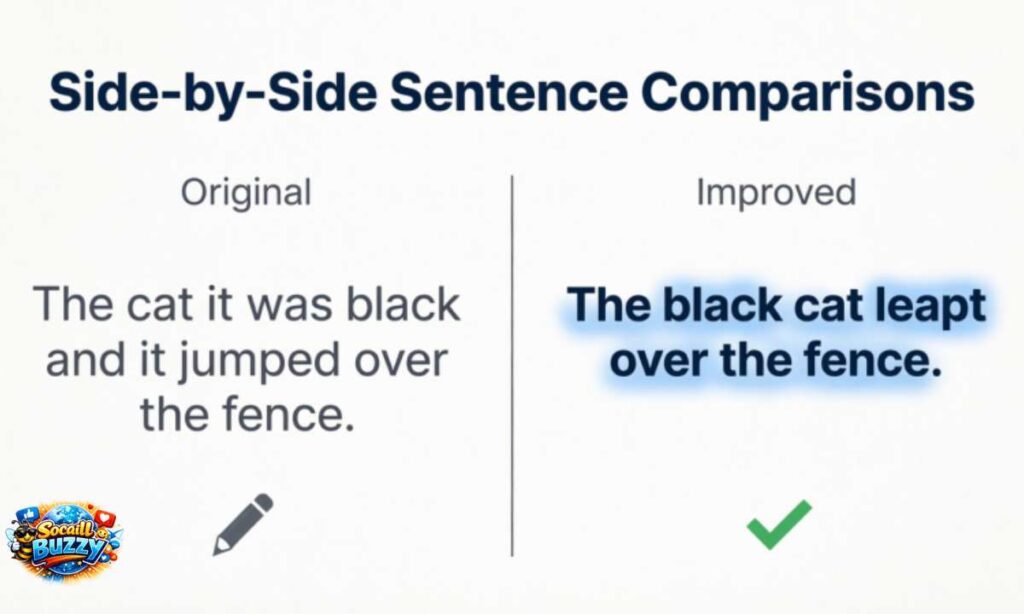
Seeing both words used in parallel sentences is one of the fastest ways to lock in the distinction:
| Accumulative | Cumulative |
| The accumulative effort of daily practice shaped her skill. | Her cumulative practice hours totaled over 2,000. |
| Accumulative stress from overwork led to burnout. | The cumulative impact of stress on health is well-researched. |
| His accumulative reading habits built a vast personal library. | His cumulative book count reached 500 titles. |
| The accumulative effect of small deposits grew the savings account. | The cumulative interest earned over 10 years was $4,200. |
| Accumulative environmental damage is difficult to reverse. | Cumulative carbon emissions since 1900 have reshaped the climate. |
Is “Accumulative” Ever the Better Choice?
Yes in specific situations, accumulative is not just acceptable, it is actually the more precise word:
- Describing behavioral tendencies: “She has an accumulative personality she never throws anything away.”
- Organic, non-measured growth: “The accumulative wisdom of decades in practice cannot be taught in a classroom.”
- Psychological or emotional buildup: “Acc,umulative grief, experienced over many losses, is different from acute grief.”
- Investment behavior (not returns): “His ac.cumulative instincts, saving consistently from age 25, built a comfortable retirement fund.”
In all of these cases, the emphasis is on the process and tendency of gathering, not on a specific measurable outcome.
Quick Reference Guide
Use this section as a fast-check reference whenever you are unsure:
Use CUMULATIVE when:
- You are describing a running total or final measurable sum
- The context involves statistics, finance, education, law, or science
- You can replace the word with “total” and the sentence still works
- You are writing formally for academic or professional audiences
Use ACCUMULATIVE when:
- You are describing a process, habit, or tendency of gathering
- The growth is organic, behavioral, or psychological
- The emphasis is on how something is building up, not on the final number
- You are writing about collecting behavior or gradual, natural buildup
Frequently Asked Questions
Q: Are accumulative and cumulative the same word?
A: They are related but not identical. Cumulative refers to a measurable total built by successive additions; accumulative describes the process or tendency of gradually gathering over time.
Q: Which word is more common in professional writing?
A: Cumulative is far more common and widely accepted in academic, financial, legal, and scientific writing.
Q: Can I use accumulative instead of cumulative in all sentences?
A: No. In formal contexts like statistics, GPA, and legal documents, cumulative is the correct choice. Using acc,umulative as a direct substitute can come across as an error.
Q: Is “accumulative GPA” correct?
A: No. The standard, universally accepted term is “cumulative GPA.” Saying “accumulative GPA” is considered incorrect.
Q: Does “accumulative” appear in major dictionaries?
A: Yes both Merriam-Webster and Oxford include it, though Merriam-Webster even lists “cumulative” as one of its definitions, reflecting how rarely it is used independently.
Q: Can a person be described as “accumulative”?
A: Yes. Calling someone acc,umulative suggests they have a tendency to gather or hoard it is a valid, if uncommon, character description.
Q: Which word should I use for “cumulative effects”?
A: Both “cumulative effects” and “acc.umulative effects” appear in published writing, but “cumulative effects” is more standard, especially in scientific and policy contexts.
Q: Is accumulative a real word or a mistake?
A: It is a real, recognized English word, not a mistake. However, it is used far less frequently, and in most contexts, cumulative is the more appropriate choice.
Conclusion
The difference between accumulative and cumulative is subtle but real, and it matters in professional and academic contexts more than most people realize.
To recap the essential distinction:
- Cumulative = the total result of successive, measurable additions. Use it for GPA, statistics, financial returns, legal evidence, and any situation where a running sum or final outcome is the point.
- Accumulative = the ongoing process or tendency of gathering. Use it for habits, behaviors, organic growth, and psychological buildup where the how of collecting matters more than the final number.
In the vast majority of formal writing situations, cumulative is the right word. It is more widely recognized, more frequently used, and expected in academic, scientific, financial, and legal writing. Acc.umulative earns its place in descriptions of behavior, tendency, and gradual, unmeasured growth.
The next time you are about to write one of these words, ask yourself one simple question: Am I talking about the total, or am I talking about the process? Your answer will point you to the right word every time.
Mastering this single distinction adds a layer of precision to your writing that careful readers will notice and that is always worth getting right.

Welcome to SocaillBuzzy! I’m the creator and writer behind this platform, dedicated to sharing meaningful content including grammar, meaning, quotes, and inspirational messages for everyday life. Through well-crafted, SEO-friendly content, I aim to spread positivity, strengthen connections, and make it easier for readers to express their emotions with clarity and warmth.