

If you have seen “KMG” pop up in a text, a comment section, or a group chat and had no idea what it meant, you are not alone. It is one of those short acronyms that looks simple but actually carries several different meanings depending on who sent it and where it showed up.
This guide breaks down every common meaning of KMG, how tone changes its interpretation, where it came from, and how it shows up differently across texting apps, social media, and even professional fields. By the end, you will know exactly how to read KMG in almost any situation, and how to reply without guessing.
Meaning & Definition of KMG
KMG is an internet and texting acronym with no single fixed meaning. Depending on context, it can stand for “Kill My Groove,” “Kill My Vibe,” “Kill Me God,” “Kill My Game,” “Keep Me Going,” or “Kiss Me Goodnight.” In casual chats, it usually expresses a sudden mood shift, mild frustration, embarrassment, or affection, while in technical fields it refers to measurement units such as kilo, mega, and giga.
That is the short version. The long version is a little more interesting, because KMG behaves differently depending on the platform, the relationship between the people texting, and even the punctuation used around it.
Click Here To Read LMAO Meaning in Text
Primary Meaning (Casual Texting)
In day to day texting, the most widely used interpretation of KMG is “Kill My Groove” or “Kill My Vibe.” People send it when something unexpectedly disrupts a good mood, a fun conversation, or a moment they were enjoying.
Picture this: someone is hyped about weekend plans, then a friend replies with bad news or something boring. A quick “kmg” captures that mental record scratch without needing a full sentence.
This meaning caught on for a simple reason. It is short, it is expressive, and it fits naturally into fast paced texting where full sentences slow things down. It also works well as a reaction on its own, without needing extra explanation.
Secondary Meanings
KMG is not a one meaning acronym, and that is exactly why so many people search for it. Depending on the sender, the conversation, or even the generation using it, KMG can mean something else entirely.
Here are the most common alternate meanings found across chats and comment sections:
| Meaning | Typical Use Case | Emotional Tone |
| Kill My Groove / Kill My Vibe | Something ruins a good mood | Mildly annoyed, sometimes joking |
| Kill Me God | Reaction to embarrassment or disbelief | Dramatic, exaggerated |
| Kill My Game | Someone interrupts flirting or a plan | Frustrated, playful |
| Keep Me Going | Words of motivation or encouragement | Supportive, positive |
| Kiss Me Goodnight | Affectionate sign off before sleeping | Warm, romantic |
| Kiss My Grits | Sarcastic or dismissive comeback | Playful sass |
None of these meanings are officially “correct.” The right one depends entirely on context, which is why tone and conversation flow matter more than the letters themselves.
Tone Matters
The same three letters can read as sweet, sarcastic, dramatic, or mildly annoyed, and the only way to tell which one applies is by paying attention to tone.
A few quick tone checks that help:
- If it follows a joke or a lighthearted comment, KMG is probably playful, not serious.
- If it appears after a compliment or a late night message, it likely leans toward the affectionate “Kiss Me Goodnight” reading.
- If it shows up right after bad news or an interruption, it is probably closer to “Kill My Vibe.”
- If it is capitalized with extra letters like “KMGGGG,” it usually signals exaggerated emotion rather than a literal meaning.
Texting lacks facial expressions and vocal tone, so acronyms like KMG lean heavily on context clues such as punctuation, capitalization, emojis, and what was said right before it.
Background & Origin of KMG
KMG does not trace back to one single origin the way some slang terms do. Instead, it grew out of general texting culture, where longer emotional phrases got shortened for speed.
Phrases like “kill my vibe” and “kill my groove” were already common in spoken slang before they made their way into text form. As messaging apps and social platforms pushed people toward shorter replies, KMG became a natural shorthand.
At the same time, a separate and older version of KMG existed in technical fields, referring to measurement scaling like kilo, mega, and giga, particularly in computing and data storage contexts. This technical use predates the slang version by a wide margin and still shows up in engineering and IT conversations today.
So there are really two parallel histories here: one rooted in emotional shorthand from texting culture, and one rooted in scientific and technical notation. They rarely overlap, but they can confuse a search results page if you are not filtering by context.
Usage in Different Contexts
Where KMG shows up changes how it should be read. Below is a breakdown of the three main environments where people encounter it.
1. Text & Chat
In one on one texting, KMG usually reflects the immediate emotional state of the sender. It is often a quick reaction rather than a planned message, which is why it tends to appear without extra explanation.
Common examples in this context:
- A reply to unexpected news
- A reaction to an awkward moment
- A sign off before ending a late night conversation
2. Social Media
On platforms like Instagram, TikTok, and X, KMG often appears in comments or captions as a reaction to something funny, cringeworthy, or relatable. Here it leans more toward the exaggerated “Kill Me God” or embarrassed reaction meaning, since public comment sections tend to favor dramatic, humorous expressions over quiet affection.
3. Professional or Technical Fields
Outside of casual chat, KMG carries a completely different weight. In IT, data storage, and engineering documentation, it typically refers to unit prefixes such as kilobyte, megabyte, and gigabyte, or more broadly to kilo, mega, and giga scaling in measurements. This version has nothing to do with mood or emotion and is treated as standard technical shorthand.
Meanings Across Platforms
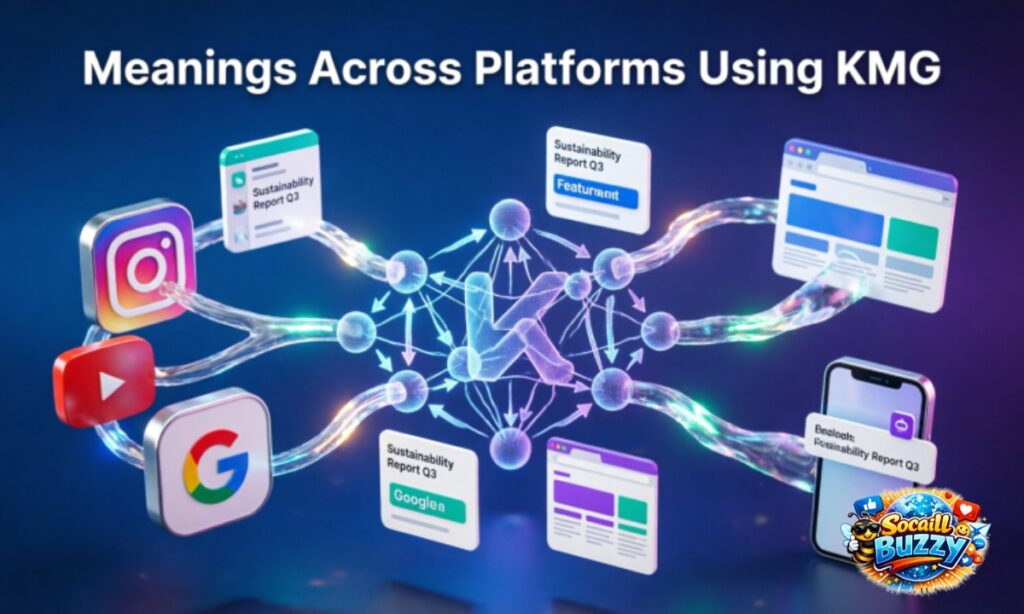
Not every platform uses KMG the same way. Below is a simple comparison of how the acronym tends to behave depending on where you see it.
On WhatsApp, KMG usually shows up in personal or close friend conversations. Because WhatsApp threads tend to be more private and ongoing, KMG here often leans toward the affectionate “Kiss Me Goodnight” meaning, especially in late evening messages between couples or close friends.
On Instagram, KMG appears more often in comments than in direct messages. It usually reacts to a funny post, an embarrassing story, or a relatable meme, closer to the “Kill Me God” or exaggerated disbelief meaning.
TikTok
TikTok comment sections favor fast, punchy reactions. KMG here is almost always used for comedic effect, reacting to something cringeworthy, chaotic, or unexpected in a video. The tone is rarely serious.
Snapchat
Snapchat conversations tend to be quick and casual, often between friends who talk daily. KMG on Snapchat can swing either way, either the “Kill My Vibe” reaction to something annoying, or the “Kiss Me Goodnight” sign off, depending on the time of day and who is texting.
Other Fields Meaning of KMG
Slang is not the only place KMG shows up. It has a long standing presence in technical, scientific, and even aviation contexts.
Physics & Computing
In computing, KMG is shorthand for kilobyte, megabyte, and gigabyte, commonly used when describing file sizes, storage capacity, or data transfer speeds. In physics and general measurement contexts, the same letters can represent the prefixes kilo, mega, and giga, used to scale units like grams, meters, or bytes.
Medical / Aviation / Technical Fields
Outside of computing, KMG can appear as an abbreviation for organizations, medical groups, or institution names, and the exact meaning shifts depending on the region and industry. In aviation, KMG is recognized as the airport code for Kunming Changshui International Airport in China, which has nothing to do with the texting slang version at all.
This is a good reminder that acronyms are rarely exclusive to one field. Context is everything.
Common Misconceptions & Mistakes
A few mix ups happen often enough that they are worth clearing up directly.
- Assuming KMG always means the same thing. It does not. The meaning shifts based on tone, platform, and relationship.
- Confusing it with similar looking codes. Some people mistake KMG for airport codes, TV station codes, or unrelated abbreviations that happen to share letters.
- Treating it as a typo. In some conversations, KMG really is just a fast typing mistake, especially from people unfamiliar with the slang, so it is worth checking context before assuming intent.
- Assuming it is always negative. Because “kill” appears in several interpretations, people sometimes assume KMG is always about frustration. In reality, several meanings, like “Keep Me Going” or “Kiss Me Goodnight,” are entirely positive or affectionate.
Similar Terms & Alternatives
KMG is part of a wider family of short reaction acronyms. Some commonly confused or related terms include:
- OMG which stands for “Oh My God,” used for surprise or shock
- KMS which stands for “Kill Me Softly” or in some cases a much more serious phrase, so it should be used carefully
- SMH for “Shaking My Head,” a disapproval reaction
- LMK for “Let Me Know,” used to prompt a reply
KMG sits somewhere between these, borrowing the dramatic tone of OMG and the shorthand style of SMH, while also carrying its own affectionate meaning that the others do not.
How to Respond to KMG
If someone sends you KMG and you are unsure what they meant, the safest move is to respond based on context rather than guessing blindly.
A few simple approaches:
- Look at what was said right before it. That usually tells you whether it is a reaction to something funny, annoying, or sweet.
- If it is genuinely unclear, a light “haha what happened” or “aww why” works for almost any interpretation.
- If the conversation has been affectionate or it is late at night, a warm reply like “goodnight” fits the “Kiss Me Goodnight” reading.
- If it followed bad news or an interruption, acknowledging the mood shift with something like “sorry, didn’t mean to kill the vibe” keeps the conversation natural.
Differences From Similar Words
It helps to see KMG next to its closest cousins in a simple table.
| Term | Common Meaning | Tone | Typical Setting |
| KMG | Multiple meanings, mood or affection based | Varies widely | Texting, social media, gaming |
| OMG | Oh My God | Surprise, shock | Anywhere |
| KMS | Kill Me Softly or a more serious expression | Dramatic, sometimes concerning | Casual chat, use with caution |
| SMH | Shaking My Head | Disapproval | Comments, group chats |
| IDK | I Don’t Know | Neutral | Anywhere |
The biggest difference is that KMG genuinely does not have one settled meaning the way OMG or IDK do. That ambiguity is exactly what makes it worth explaining in detail.
Relevance in Online Conversations & Dating Apps
On dating apps and in flirty texting, KMG tends to lean toward its warmer meanings. “Kiss Me Goodnight” fits naturally into late night conversations between people who are getting to know each other, adding a light romantic touch without being overly forward.
It can also show up as “Kill My Game,” used jokingly when a third party interrupts a flirty exchange or when a conversation gets awkward at the wrong moment. In these settings, KMG works as a low pressure way to express interest or acknowledge an awkward beat without making things too serious.
Popularity & Trends Over Time
KMG is not a brand new acronym, but its popularity has grown steadily as texting culture continues to favor shorter, faster expressions. A few trends worth noting heading into 2026:
- Short reaction acronyms in general are seeing more use across comment sections, driven by fast scrolling habits on short form video platforms.
- Gen Z and younger Gen Alpha users are more likely to use KMG in its emotional or affectionate sense, while older users are more likely to encounter it in technical contexts first.
- As voice to text and predictive typing improve, some users report seeing KMG appear as an autocorrect suggestion, which has slightly increased its accidental use.
- Search interest in “KMG meaning” tends to spike whenever the term trends in a viral TikTok comment thread or gets used by a popular creator, showing how quickly slang spreads once it gets visibility.
How Context Changes the Meaning of KMG
Context is really the deciding factor every single time. The same three letters can shift meaning based on:
- Who sent it. A close friend, a romantic interest, or a stranger online will likely use KMG differently.
- What came before it. The previous message almost always signals the intended tone.
- The platform. Comment sections favor dramatic reactions, while private messages favor affectionate or personal meanings.
- Time of day. Late night messages often lean toward the “Kiss Me Goodnight” interpretation.
- Capitalization and punctuation. Extra letters or exclamation points usually signal exaggeration rather than a literal statement.
Custom Example Sentences Using KMG

Seeing KMG in real sentences makes the differences easier to spot.
- “I finally sat down to relax and then my landlord called. KMG.”
- “That fall in the video had me KMG, I can’t stop laughing.”
- “Long day, heading to bed now. KMG, talk tomorrow.”
- “We were vibing until his ex texted him mid conversation. KMG.”
- “You’ve got this, KMG through finals week.”
Each sentence uses the same acronym but lands with a completely different feeling depending on the situation around it.
Suitability for Professional Communication
KMG, in any of its slang forms, does not belong in professional or formal communication. Emails, workplace chats, and client messages should avoid it entirely, since the ambiguity that makes it fun in casual texting makes it confusing and unprofessional in a work setting.
The only exception is technical usage. In IT documentation, engineering reports, or data specifications, KMG as a reference to kilo, mega, and giga units is perfectly appropriate and widely understood within those fields.
Hidden or Offensive Meanings
For the most part, KMG is harmless slang without any inherently offensive meaning. However, a few things are worth keeping in mind:
- Some interpretations involving “kill” are meant purely as exaggerated expressions and are not meant to be taken literally.
- As with any acronym involving words like “kill,” context matters, and if a message ever raises genuine concern about someone’s wellbeing, it should always be taken seriously rather than dismissed as slang.
- Regional or community specific inside jokes can occasionally attach a more private meaning to KMG within a specific friend group, which will not match any dictionary definition.
If a message ever feels genuinely concerning rather than casual, it is always better to check in directly instead of assuming it is just slang.
Conclusion
KMG does not have one fixed meaning, and that is exactly why it causes so much confusion. In everyday texting, it usually points to a shift in mood, whether that is mild frustration, embarrassment, encouragement, or affection. On social media, it leans more dramatic and reactionary. In technical fields, it refers to measurement units and has nothing to do with emotion at all.
The fastest way to understand KMG in any message is to read the context around it rather than the letters alone. Once you factor in tone, platform, and the relationship between the people texting, the intended meaning usually becomes clear within seconds.

Welcome to SocaillBuzzy! I’m the creator and writer behind this platform, dedicated to sharing meaningful content including grammar, meaning, quotes, and inspirational messages for everyday life. Through well-crafted, SEO-friendly content, I aim to spread positivity, strengthen connections, and make it easier for readers to express their emotions with clarity and warmth.

