You get a text that ends with “luv you” and your brain immediately starts working overtime. Does that mean love? Is it just a friendly sign off? Are they flirting, or just being nice?
If you have ever paused mid conversation trying to figure out what “luv” really means, you are not alone. This tiny four letter word shows up everywhere now, in texts, comments, captions, and DMs, and it carries more emotional weight than most people realize.
This guide breaks down exactly what “luv” means, where it came from, how different people use it, and how to know whether it is romantic, friendly, or just a habit.
What Does “Luv” Mean in Text? (Quick Answer)
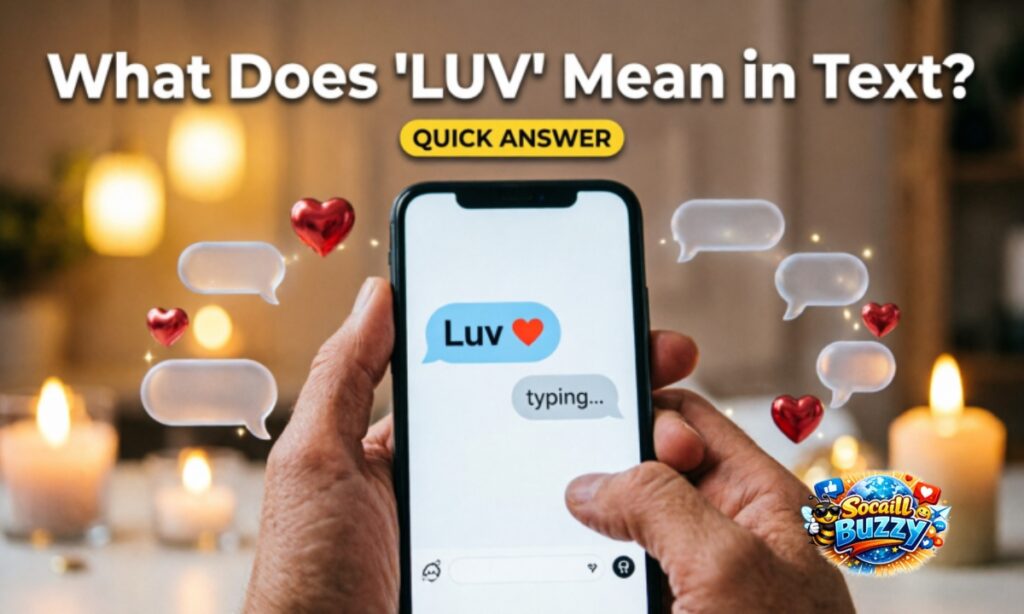
“Luv” is a casual, shortened spelling of the word “love.” It is used in texting and social media to express affection, warmth, or friendliness, without the emotional weight that the full word “love” often carries. It can be romantic, platonic, or simply polite, depending on who says it and the context around it.
Click Here To Read : SSA Meaning Explained
Why “Luv” Became So Popular in Texting
The shift from “love” to “luv” did not happen by accident. A few real factors pushed it into everyday language.
- Old texting limits. Early phones capped messages at a set number of characters, so people trimmed words wherever they could.
- Speed matters. Typing “luv” is faster than typing “love,” and in fast paced chats, speed often wins over formality.
- It sounds like how people actually talk. Say “love” out loud in a relaxed tone and it often comes out closer to “luv.” The spelling just caught up to speech.
- Pop culture normalized it. Song lyrics, captions, and youth slang made the shortened spelling feel natural rather than lazy.
- Tone control. Many people use “luv” on purpose because it feels lighter than “love.” It softens the message instead of intensifying it.
Even though character limits disappeared years ago, the habit stuck. People kept using “luv” because of how it feels, not because they have to save space anymore.
Luv vs Love: What Is the Real Difference?
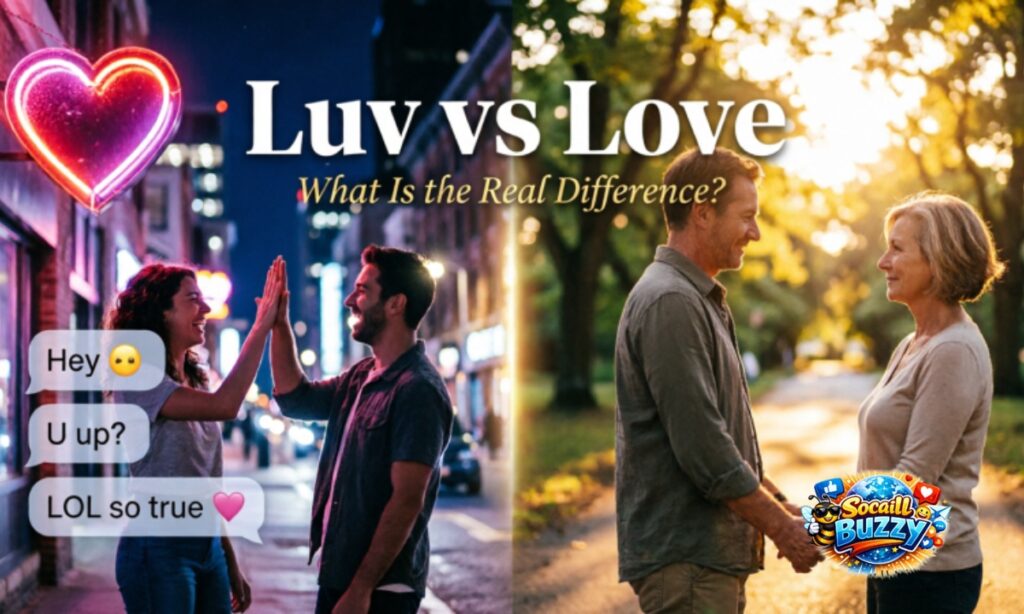
Both words point to the same root feeling, but they do not land the same way in a conversation. Here is a simple side by side comparison.
| Aspect | “Luv” | “Love” |
| Tone | Casual, light, playful | Serious, deep, formal |
| Common use | Texting, social media, casual chats | Relationships, emotional talks, formal writing |
| Emotional intensity | Lower, softer | Higher, more direct |
| Best used with | Friends, family, casual partners | Serious partners, close family, meaningful moments |
| Risk of misreading | Higher, since it can mean many things | Lower, meaning is usually clear |
The main takeaway is this: “luv” keeps the door open. It signals care without forcing a big emotional statement. “Love” closes that door and makes the feeling explicit.
Read Also : Gyatt Meaning Explained
Where You See “Luv” Used the Most
“Luv” is not stuck in one type of conversation. It shows up in slightly different ways depending on the platform.
Texting Between Friends
Among friends, “luv” usually means “I appreciate you” or “I care about you,” nothing more intense than that. A message like “thanks for helping me out, luv you” is closer to gratitude than romance.
Texting Between Romantic Partners
In a relationship, “luv” can still carry real romantic meaning, just in a softer package. Partners often use it for everyday check ins, while saving the full word “love” for bigger, more emotional moments.
Social Media Comments and Captions
On Instagram, TikTok, and similar platforms, “luv” often shows up in comments and captions to sound supportive or complimentary. It adds warmth to a comment without making it feel overly personal.
Dating Apps
On apps like Tinder, Bumble, or Hinge, “luv” is often used early in a conversation to signal interest and warmth without coming across as too intense too fast. It keeps the tone light and approachable.
British and Regional Slang
In parts of the UK and other English speaking regions, “luv” is used almost like “dear” or “sweetheart,” sometimes even between strangers, such as a shopkeeper greeting a customer. In this context, it has nothing to do with romance at all.
Common Meanings of “Luv” Based on Context
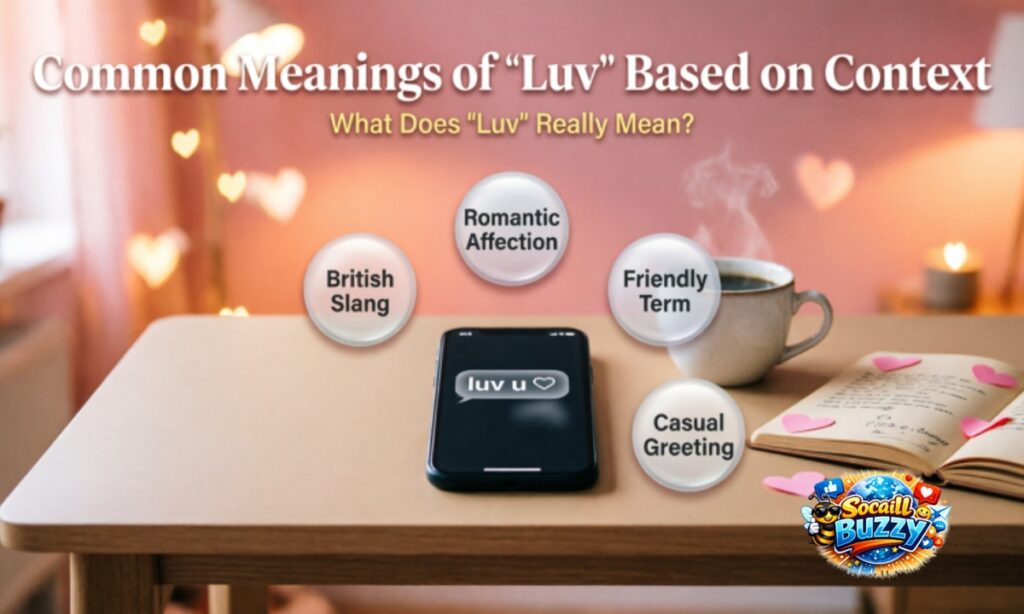
Since “luv” changes meaning depending on who is using it, it helps to break it down by relationship type.
- From a close friend: Genuine appreciation, warmth, or platonic affection.
- From a family member: Familial love, comfort, and closeness.
- From a romantic partner: Real affection, expressed in a relaxed, everyday tone.
- From someone you just started talking to: Light flirting or friendliness, not a serious declaration.
- From a stranger in certain regions: A polite, informal term of address with no romantic meaning at all.
Signs “Luv” Is Romantic
Context clues matter more than the word itself. These signs suggest “luv” is being used with romantic intent.
- It appears alongside consistent one on one attention and quick replies.
- It is paired with compliments about your appearance or personality.
- The conversation includes plans to meet up or deepen the connection.
- Emojis like hearts or kissy faces show up alongside “luv.”
- It is used consistently over time, not just once in passing.
Signs “Luv” Is Just Friendly
On the other hand, these patterns usually point to a platonic or casual use.
- It is used the same way with multiple people, not just you.
- There is no flirty follow up or personal attention beyond the message itself.
- It appears at the end of casual, everyday conversations.
- The person uses “luv” as a general sign off, similar to “take care” or “talk soon.”
- It shows up in group chats or public comments, not private, personal messages.
When You Should Avoid Using “Luv”
“Luv” works well in relaxed settings, but it is not right for every conversation. Avoid it in these situations.
- Work emails or professional messages. It can come across as unprofessional or careless.
- Serious emotional conversations. If you need to express something deep or important, the full word “love” communicates that clearly, while “luv” may soften it too much.
- First interactions in formal settings. Using it too early with someone you barely know outside casual apps can feel forced.
- Conflict resolution. During an argument or a sensitive discussion, casual slang can feel dismissive rather than caring.
What Is New About “Luv” in 2026
Texting culture keeps shifting, and a few updated patterns are worth knowing heading into 2026.
- AI chat replies are shaping tone habits. As more people use AI assisted messaging suggestions, casual affectionate words like “luv” are being suggested more often in quick reply options, which is normalizing its use even in newer or more formal digital spaces.
- Short form video culture keeps pushing it further. With TikTok and Instagram Reels captions favoring short, expressive language, “luv” continues to spread as a caption word, not just a texting word.
- Gen Alpha is picking it up earlier. Younger users entering texting and social media for the first time are adopting “luv” as a default casual term, rather than treating it as a trend they picked up later, which suggests it is becoming a permanent part of digital language rather than a passing phase.
- Cross platform consistency is increasing. A few years ago, “luv” leaned younger and more casual on certain apps. Now it appears fairly consistently across texting, DMs, comments, and even some workplace chat tools that lean informal, showing the word has broadened its audience.
- Voice to text is influencing spelling choices. As more people dictate messages instead of typing, autocorrect and voice recognition tools sometimes default to the shorter, more common spelling in casual contexts, quietly reinforcing “luv” as a normal alternative rather than a deliberate shortcut.
How to Respond When Someone Texts You “Luv”
If you are unsure how to reply, keep these simple guidelines in mind.
- Match their tone. If the message is light and casual, respond the same way instead of overanalyzing it.
- If you are unsure of the intent, a warm but neutral reply works well, such as continuing the conversation naturally rather than reading too much into one word.
- If you want to test the waters, you can mirror their language back and see how they respond over time, since patterns reveal more than single messages.
- If the message feels romantic and you are interested, feel free to lean into the same warmth. If you are not interested, keep your reply friendly but clearly platonic.
Quick Reference Table: Luv Meaning by Situation
| Who sent it | Likely meaning | Should you worry about it? |
| Long time friend | Appreciation, closeness | No |
| Family member | Familial love | No |
| Romantic partner | Genuine affection | No |
| New match on a dating app | Light flirting, interest | Only if paired with other signals |
| Coworker in a casual chat | Friendly gesture | Usually no, unless workplace norms suggest otherwise |
| Stranger, regional slang | Polite address term | No |
Is “luv” the same as “love”?
Not exactly. Both come from the same root word, but “luv” is lighter and more casual, while “love” carries more emotional weight and seriousness.
Does “luv” always mean someone likes you romantically?
No. Most of the time, “luv” is used platonically between friends and family. Romantic intent depends on the full context of the conversation, not just the word itself.
Is it okay to use “luv” with someone I just met?
It depends on the setting. On casual apps or relaxed social platforms, it is common and generally fine. In professional or formal introductions, it is better to stick with more neutral language.
Why do some people use “luv” instead of “love” even in serious relationships?
Many couples use “luv” for everyday, casual affection and save “love” for bigger, more meaningful moments. It helps create a natural rhythm between light and serious expressions of care.
Is “luv” considered unprofessional?
In workplace emails or formal communication, yes, it can come across as too casual. In relaxed team chats or informal workplace culture, it may be acceptable depending on your specific environment.
Final Thoughts
“Luv” is a small word that carries a lot of flexibility. It can mean deep affection, simple friendliness, or just a habit picked up from years of casual texting. The real meaning almost always comes from the relationship, the pattern of communication, and the context around it, not the word by itself.
The next time you see “luv” in a text, look at the bigger picture before deciding what it means. Nine times out of ten, the answer becomes obvious once you consider who sent it and how they have been talking to you all along.
Welcome to SocaillBuzzy! I’m the creator and writer behind this platform, dedicated to sharing meaningful content including grammar, meaning, quotes, and inspirational messages for everyday life. Through well-crafted, SEO-friendly content, I aim to spread positivity, strengthen connections, and make it easier for readers to express their emotions with clarity and warmth.